



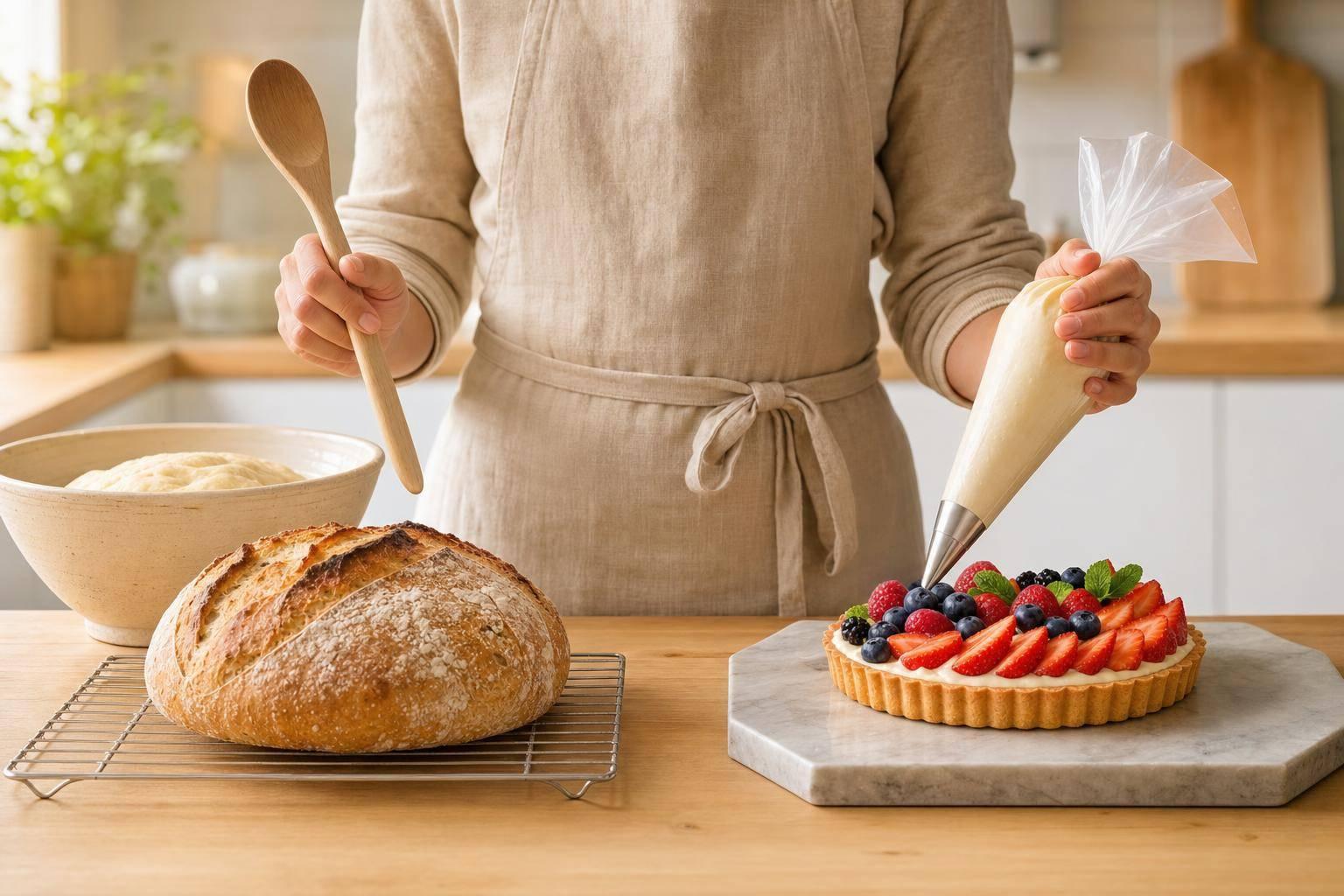
Here’s the short answer: baking is the big category, and pastry is one part of it. If you want to make bread, cookies, cakes, and savory oven dishes, start with baking. If you want croissants, tarts, choux, and plated desserts, start with pastry.
I’d sum it up like this:
- Baking = broader scope
- Pastry = tighter control
- Baking = better first step for most people
- Pastry = better fit if you like detail-heavy dessert work
The biggest split is precision. In baking, small changes can sometimes still work out fine. In pastry, a few grams, a warm stick of butter, or poor timing can change the whole result. That’s why pastry often relies on scales, thermometers, and close temperature control.
Bakers vs Pastry Chefs: What’s the difference??
sbb-itb-7261261
Quick Comparison
| Area | Baking | Pastry |
|---|---|---|
| Scope | Broad category | Part of baking |
| Common foods | Bread, cookies, cakes, muffins, savory bakes | Croissants, puff pastry, tarts, éclairs, custards |
| Main focus | Structure, crumb, texture, oven use | Layers, shells, fillings, finish |
| Skill focus | Mixing, kneading, proofing, doneness | Lamination, piping, blind baking, sugar/chocolate work |
| Precision level | Medium to high | High |
| Best first step for | Most home cooks | Dessert-focused learners |
A simple rule works well: learn baking first for day-to-day skills, and start with pastry first only if desserts are your main goal. Both use measuring, mixing, heat control, and mise en place, but pastry gives you less room for mistakes.
If I were choosing a path, I’d match it to what I want to make most often.
What Pastry Includes
Pastry covers desserts and doughs that depend on exact ratios, cold temperatures, and careful finishing. It leans on butter-heavy doughs, precise construction, and polished presentation. Just as important, it takes careful assembly to turn separate parts into a finished dessert.
Pastry Products: Laminated Doughs, Tarts, and Choux
Pastry includes laminated doughs, choux, tarts, and finishing work such as glazing and tempering.
Common examples include:
- Laminated doughs like croissants, Danishes, and puff pastry. These are made by folding cold butter into dough to create clear, flaky layers.
- Choux pastry (pâte à choux), which works in a different way. You cook a paste on the stovetop, then pipe it into shells that puff in the oven to make éclairs, cream puffs, and profiteroles.
- Tarts and tart shells, including fruit tarts and quiche. These depend on cutting fat into flour, blind baking, and careful filling assembly.
Pastry also includes glazing, chocolate work, sugar work, cake decoration, and plated desserts. In each case, small shifts in temperature or technique can change the final result. That level of precision is what sets pastry apart.
Pastry Techniques, Tools, and Precision
Pastry depends on close control over ingredients and temperature. Lamination means keeping butter cold enough to stay in separate layers instead of melting into the dough. Choux paste needs to be cooked to the right consistency before piping. And because pastry work often has a lot of moving parts, it helps to have ingredients measured out and tools ready before you begin.
Pastry tools usually include a digital scale, rolling pin, bench scraper, piping bags, and thermometers to check sugar stages and oven temperature. Volume measurements aren’t accurate enough for pastry formulas, which is why a scale matters so much. Pastry is technical because even small mistakes can change texture, shape, and finish.
Those same controls are what separate pastry from the broader baking skills covered next.
What Baking Includes
If pastry calls for tighter control, baking is the bigger umbrella under it. It covers yeast breads, quick breads, cookies, cakes, and savory bakes. For many people, baking is the best place to start because it teaches the core skills you’ll use again and again: measuring, mixing, and managing heat across all kinds of recipes.
Baking Products: Breads, Cookies, Cakes, and Savory Bakes
On the bread side, baking includes sourdough, focaccia, brioche, dinner rolls, and sandwich loaves. On the sweet side, it includes chocolate chip cookies, layer cakes, brownies, muffins, scones, and fruit pies [2]. Baking also includes savory items like quiche and other savory bakes [2].
That range matters. When you move between sweet and savory recipes, you keep practicing the same basics in different ways. A loaf of bread, a tray of cookies, and a quiche may look like totally different projects, but they all teach careful measuring, leavening, fermentation, and temperature control.
Baking Techniques, Tools, and Core Ingredients
The main techniques in baking include scaling, mixing, kneading, folding, proofing, and checking doneness [2]. Bread baking leans more on kneading and fermentation to build structure. Cakes and cookies, on the other hand, depend more on creaming and careful folding so batters stay light.
Standard tools include a digital scale, mixer, sheet pans, a thermometer, and scrapers [2]. Most baking starts with the same core ingredients: flour, water, yeast, salt, eggs, sugar, butter, oil, baking powder, and baking soda [2]. The big difference comes down to how you combine those ingredients and the ratios you use.
A simple habit makes a big difference: measure and organize your ingredients before you begin. It keeps your workflow steady and cuts down on mistakes, especially when you’re juggling items with different baking times or oven temperatures [2].
Next, compare baking and pastry side by side to see where the skills overlap and where precision matters more.
Pastry vs. Baking: Key Differences and Where They Overlap
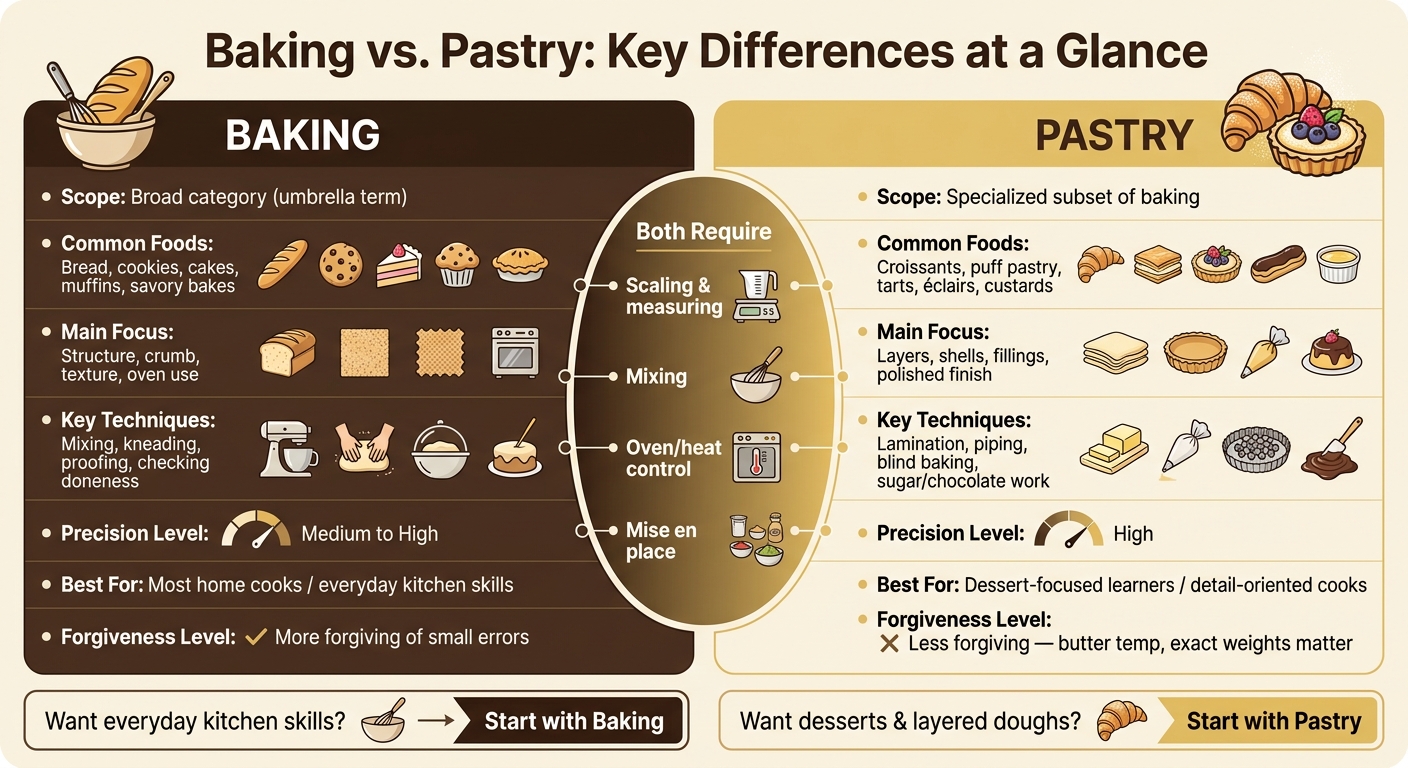
Baking vs Pastry: Key Differences at a Glance
Baking and pastry both start in the oven, but they don’t ask for the same kind of work. A croissant and a loaf of bread may both be baked, yet the method behind each one is very different.
Baking covers breads, cookies, cakes, and savory bakes. The usual goal is structure and consistency: a good crumb, a chewy cookie, a tender cake layer. Pastry is a narrower lane. It leans into flakiness, crisp shells, and airy layers. Bread baking puts the focus on fermentation and crumb structure, while pastry centers on lamination, piping, sugar work, and careful assembly [1][2].
The overlap comes down to the basics. Both depend on scaling, mixing, oven control, and mise en place. Where they part ways is control. Pastry leaves less room for error, especially with butter temperature, exact weights, and assembly. Baking is often a bit more forgiving when small variables shift [1][2][3].
With that distinction in place, the next step is figuring out which one to learn first.
Which Should You Learn First?
Once you know the difference, the next step is figuring out where to begin. The simplest way to choose is this: start with the foods you want to make most.
Start with Baking for Everyday Skills and Broad Fundamentals
If you want to get better at bread, cookies, muffins, and simple cakes, start with baking. It teaches core kitchen skills like measuring, mixing, and managing the oven. Those skills carry over into pastry too, so baking gives you a strong base to build on.
Baking also teaches mise en place – having everything measured and ready before you start – which helps keep production flowing on schedule [2]. That habit matters more than people think. When your setup is in order, the work feels smoother, and stepping into pastry is a lot less intimidating.
Start with Pastry if You Enjoy Detail, Layers, and Dessert Work
If your goal is everyday kitchen confidence, start with baking. If your goal is dessert technique, start with pastry basics.
A smart way in is to begin with choux, tart shells, or custards before taking on laminated doughs. That gives you time to learn dough handling and temperature control before moving into tougher work.
A Practical Learning Path at Park City Culinary Institute
For a structured path, Park City Culinary Institute builds these skills through hands-on practice.
Conclusion: Choose Your Starting Point Based on What You Want to Make
Baking is the broader base. Pastry is the more specialized path.
After looking at scope, tools, and precision, the choice comes down to one thing: what do you want to make?
If you want broad, everyday kitchen skills, start with baking. It gives you skills you’ll use across a lot of recipes.
If you’re drawn to detail-heavy desserts and layered doughs, start with pastry. That path makes more sense if you want to make tarts, laminated doughs, chocolate work, and plated desserts.
Both paths build useful skills. The best place to start is the one that lines up with your goals most clearly.
FAQs
Can I learn pastry without learning baking first?
Yes – you can learn pastry arts directly. Many baking and pastry certificate programs start with the basics and teach core skills from the ground up.
Pastry and baking often overlap, but you don’t need to master general baking first. In most starter-level training, you’ll learn basic baking techniques and dough preparation as part of the process for both paths.
What should beginners bake first?
Beginners should start with the basics: learning how ingredients work, measuring with care, and using the right baking temperature. Those core skills help you get steady results and feel more sure of yourself in the kitchen.
A good place to begin is with simple bread methods, such as fermentation and kneading, or easy pastry doughs before moving on to harder bakes.
Do I need a scale for pastry?
Yes. A digital scale is a key tool for pastry and baking because consistent results depend on precision.
Measuring ingredients by weight instead of volume helps you get the accuracy needed for delicate tasks like dough prep, pastry work, and confectionery.
Ready to start baking with an instructor? Explore our Pastry & Baking Certificate, available in person and online, or request info to find the right starting point.
Related Blog Posts
- Complete Guide to Pastry and Baking Fundamentals
- Ultimate Guide to Piping Practice for Home Bakers
- What You Learn In Culinary School That You Can Use At Home
- Beginner Baking Skills Every Pastry Student Should Know
Ready to go deeper? Explore our hands-on Pastry & Baking Certificate in Salt Lake City, or browse cooking classes for home cooks in Salt Lake City and Park City.