
Yes – adults can go to culinary school later in life. In most cases, you only need to be 18+ and have a high school diploma or GED. The main question isn’t age. It’s whether the program fits your goal, time, budget, and stamina.
Here’s the short version:
- If you want a job change, a certificate program may make sense.
- If you want to start a food business, business-focused training matters as much as cooking.
- If you want to cook better at home, recreational or part-time classes may be enough.
- Many programs teach basic skills first, such as sanitation, knife work, and core cooking methods.
- Costs can range from $1,495 for business training to $9,990 for on-campus certificate study, not counting gear, books, and fees.
- Hands-on training can mean standing for 7 to 8 hours at a time in a hot kitchen.
About 4 to 12 months is common for certificate programs, while short classes work better for hobby cooks and retirees. Online study helps with topics like food safety and food cost, but most cooking skills still need in-person practice.
| Path | Best for | Time | Cost note |
|---|---|---|---|
| Professional certificate | Career changers | 4–12 months | Higher tuition |
| Business-focused certificate | Future food business owners | Shorter program | Starts around $1,495 |
| Recreational classes | Home cooks, retirees | Short-term | Lower upfront cost |
| Online or hybrid | Busy adults | More flexible | Travel costs may be lower |
If I were deciding, I’d keep it simple: pick the format that matches your life now, not the one that sounds most impressive on paper.
Age, Experience, and Admission Requirements
Adults can attend culinary school at any age. Most U.S. programs ask applicants to be 18 or older and to have a high school diploma or GED [3].
The good news? Prior kitchen work usually isn’t required. Most programs start at the beginning, with sanitation, knife skills, and basic technique [2]. That setup opens the door to complete beginners and experienced home cooks alike.
Schools also look for things that matter in any hands-on field: professionalism, reliability, and a willingness to learn. Once you know you meet the basic entry requirements, the next step is figuring out which program format works with your schedule.
Why Adult Students Often Perform Well in Culinary Training
Adult students often do well in culinary training because they bring useful skills from past jobs and life experience. Discipline, communication, and business know-how can help in class and later on in management roles or business ownership [1][3].
That can make a big difference. A student who already knows how to manage time, work with a team, or handle pressure may feel more steady in a fast-paced kitchen. Those strengths tend to matter even more when the program lines up with your time, budget, and long-term plans.
What Park City Culinary Institute Offers Adult Learners
Park City Culinary Institute offers ACF-approved certificate programs in Culinary Arts, Cuisine, and Pastry & Baking. Adult learners can choose on-campus or online options, and classes are taught by chef-instructors with more than 10 years of industry experience.
For many adults, the appeal goes beyond restaurant work. Culinary training can also support better home cooking, a career shift, or the launch of a small food business. From there, the next practical question is simple: does online vs. in-person training fit your life best?
sbb-itb-7261261
Program Types and Schedules That Work for Adults
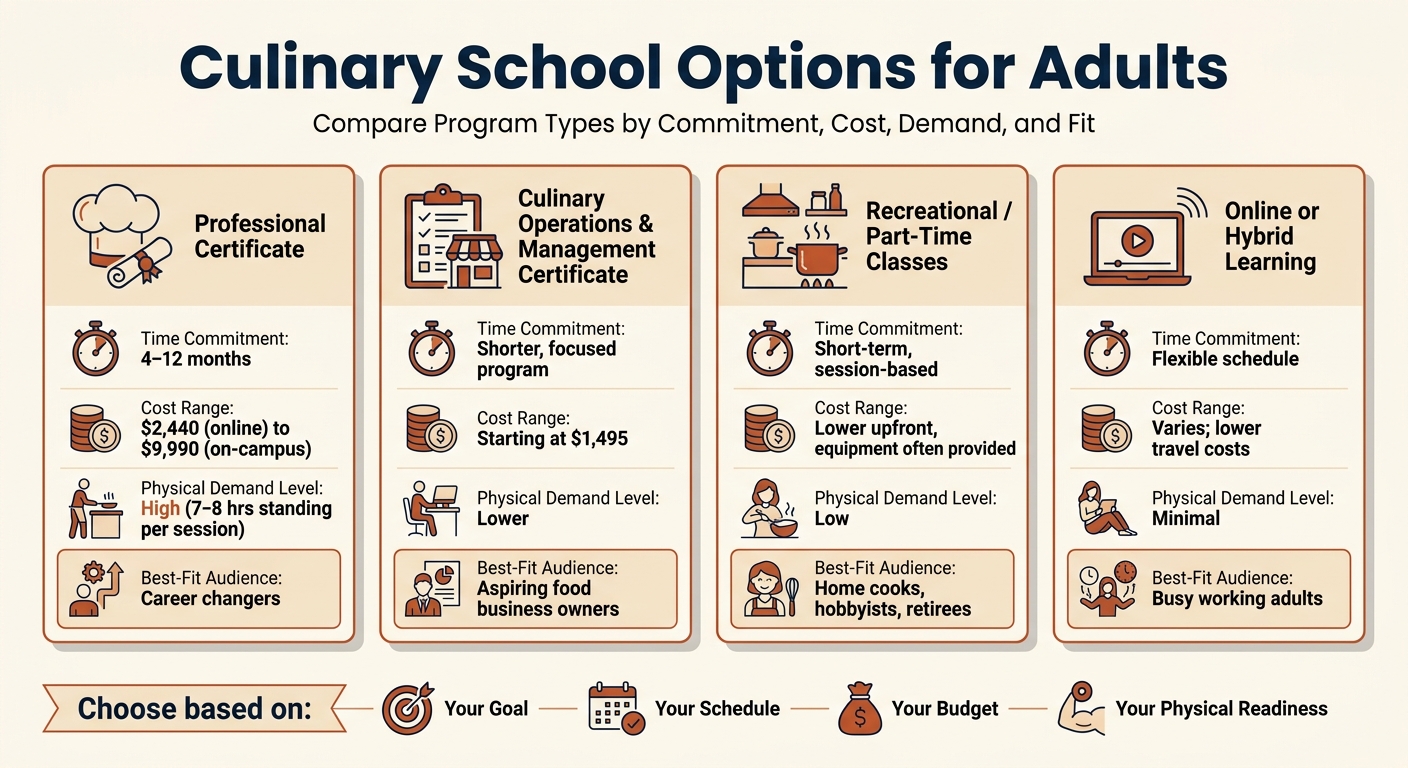
Culinary School Options for Adults: Programs, Costs & Time Compared
Adults usually need a program that fits around work, family, or retirement. That’s why many culinary schools offer evening, weekend, or hybrid options. Some vocational programs even meet four evenings a week [4]. Once you know you meet the basic requirements, the next move is simple: pick a format that works with your schedule, not against it.
| Program Type | Time Commitment | Best For |
|---|---|---|
| Professional Certificate | Several months | Career changers |
| Recreational | Short-term | Home cooks, hobbyists |
| Online or Hybrid Learning | Flexible | Working adults, busy schedules |
| Culinary Operations & Management | Focused | Aspiring food business owners |
Professional Certificates for Career Changes or Business Goals
If you’re making a career change, a professional certificate is usually the most direct route. Most programs run 4 to 12 months and center on hands-on technique [7][6].
At Park City Culinary Institute, professional certificates are offered in Culinary Arts, Cuisine, and Pastry & Baking. On-campus tuition ranges from $6,260 to $9,990, while online options start at $2,440. There’s also a Culinary Operations & Management certificate for $1,495, which covers food business and cost management.
Part-Time, Recreational, and Online Learning Options
For adults juggling a job, family life, or retirement plans, flexibility matters just as much as what’s being taught. Online learning is a good fit for theory-heavy topics. But kitchen skills like knife work, baking, and sauces still need in-person practice [7].
Recreational classes offer a lower-commitment way in. They’re chef-led, open to all skill levels, and built around specific topics instead of a full program. As Megan Leppert, Associate Professor of Culinary Arts, puts it:
"It’s a great option for people who aren’t sure this is what they want to do, without incurring a lot of debt for culinary school. It’s a great steppingstone for those who want to try it." [4]
Park City Culinary Institute also offers recreational cooking classes in a professional kitchen setting. That gives adults a chance to try the format before signing up for a certificate. Before enrolling, look at the full picture: tuition, supplies, and the physical demands that come with kitchen training.
Costs, Physical Demands, and Practical Considerations
For adults changing careers, starting a food business, or learning for personal growth, upfront costs matter just as much as tuition. Before you enroll, it helps to look at the full picture of what you’ll spend – and what the training will ask of you physically.
What Adults Should Budget Before Enrolling
Plan for more than tuition. Many culinary programs come with extra costs that add up fast.
You may need to pay for:
- A professional knife kit
- Slip-resistant shoes
- A chef coat and other uniform items
- Aprons
- Textbooks
Some schools also charge separate lab or ingredient fees, so ask if those are included before you sign anything. Food safety exams like ServSafe usually cost extra too.
Then there are the day-to-day costs people often miss. Commuting and parking can quietly eat into your budget. If you study online, you may save on travel, but you’ll still need a kitchen setup for culinary students with essential tools and ingredients at home. Recreational classes are often simpler on this front, since equipment is usually provided.
For veterans, on-campus courses at Park City Culinary Institute are eligible for the GI Bill®, which can cut the total cost in a big way.
Next comes the other side of the decision: whether the daily pace of training works for your health, energy, and schedule.
How Physically Demanding Culinary Training Is
Money is one part of the choice. Stamina is the other.
The issue isn’t age. It’s whether your body and routine can handle the pace. Professional kitchens are hot, fast, and physically demanding. Expect to stand for 7 to 8 hours or more during hands-on lab sessions [8][5], work in warm kitchens, lift heavy pots and sheet pans, and repeat prep tasks for long stretches.
That kind of schedule can feel like a marathon in kitchen clogs.
If that pace doesn’t fit your health or energy level, online and recreational options offer a lower-intensity route. Online courses work well for theory-based topics like food safety, nutrition, and cost control, while hands-on techniques still need practice [7][8]. Recreational classes usually move at a lighter pace and ask for less time. Both options let you build real skills without the full strain of a professional kitchen setting.
What Adults Can Realistically Expect from Culinary School
Once you’ve looked at cost and physical demands, the next step is simple: what do you actually get out of culinary school? The answer depends on what you want from it.
Career, Business, and Personal Enrichment Outcomes
Adults come in with different goals, so the results look different too.
If you’re changing careers, culinary school can help you get in the door. But it usually doesn’t drop people straight into top kitchen jobs. Most career changers begin in roles like prep cook, line cook, or baker. Moving into sous chef or executive chef jobs usually takes years of kitchen experience.
If you want to start a food business, cooking skills alone often aren’t enough. That’s where operations training matters. Park City Culinary Institute’s Culinary Operations & Management certificate is available on campus or online, and it helps future owners learn the day-to-day side of running a food business.
For home cooks and retirees, the payoff is often more immediate. Cooking classes vs. culinary school is a common debate, but recreational classes can build solid confidence through better technique, menu planning, and entertaining skills. In that case, the goal isn’t a new career. It’s becoming a stronger, more capable cook.
Key Takeaways for Deciding If Culinary School Fits Your Life
The best program usually comes down to four things: your goal, your schedule, your budget, and your physical readiness.
- A career change often points to a professional certificate.
- A food business idea pairs well with operations training.
- Personal growth tends to fit recreational or part-time options.
"Culinary school will prepare you, but you do need a certain passion and interest in food and hospitality. It’s not always as glamorous as an episode of Chef’s Table." [3]
On-campus, online, certificate, and recreational options each fit a different type of adult learner. So the main issue usually isn’t age. It’s whether the program matches your life right now.
FAQs
Am I too old to start culinary school?
No. Culinary school welcomes students of all ages, including career changers in their 30s, 40s, and beyond.
Many programs include students ranging from young adults to people in their 60s. In fact, life experience and maturity can work in your favor, whether you’re after a new career, want to start a food business, or simply want to learn for your own enjoyment.
Can I keep my job while taking classes?
Yes. Many culinary schools offer flexible options for working adults, including online programs, evening or weekend classes, and shorter certificate programs.
That means you can keep your job while building kitchen skills on a schedule that fits your life. Some people go with part-time in-person classes. Others choose online learning for more room to plan around work, family, or both.
Either way, the goal is the same: learn at a pace that matches your lifestyle and career goals.
Which program fits my goals best?
The best culinary program comes down to three things: your goals, your budget, and your schedule.
A certificate or diploma can be a smart pick if you want to build core kitchen skills in less time. It gets you into the kitchen fast and focuses on the basics you’ll use on the job.
An associate or bachelor’s degree goes deeper. Along with cooking, you’ll usually study business, management, and other academic subjects. That can matter if you want more than kitchen training.
If your plan is to start a business, pay close attention to programs that include food management or entrepreneurship training. Cooking skill matters, of course, but running a restaurant or food business is a whole different ballgame.
It also helps to compare what you’re getting beyond the sticker price. Look at:
- Hands-on lab time
- Externships
- Total cost, not just tuition
That last point matters more than many people think. A lower tuition rate can still lead to a higher overall bill once fees, supplies, and other costs are added in.
Starting culinary school later in life? Explore the Professional Certificate in the Culinary Arts or our shorter cooking classes, and request info to talk through schedules and options with our team.
Related Blog Posts
- Culinary School vs Self-Taught: Which Path Works?
- Online vs In-Person Culinary Training Compared
- Can You Go to Culinary School While Working Full Time?
- GI Bill® Culinary Schools vs. Traditional Colleges
If you want short recreational sessions, browse our cooking classes in Salt Lake City and Park City. For a deeper culinary arts path, explore the Professional Certificate in the Culinary Arts.