
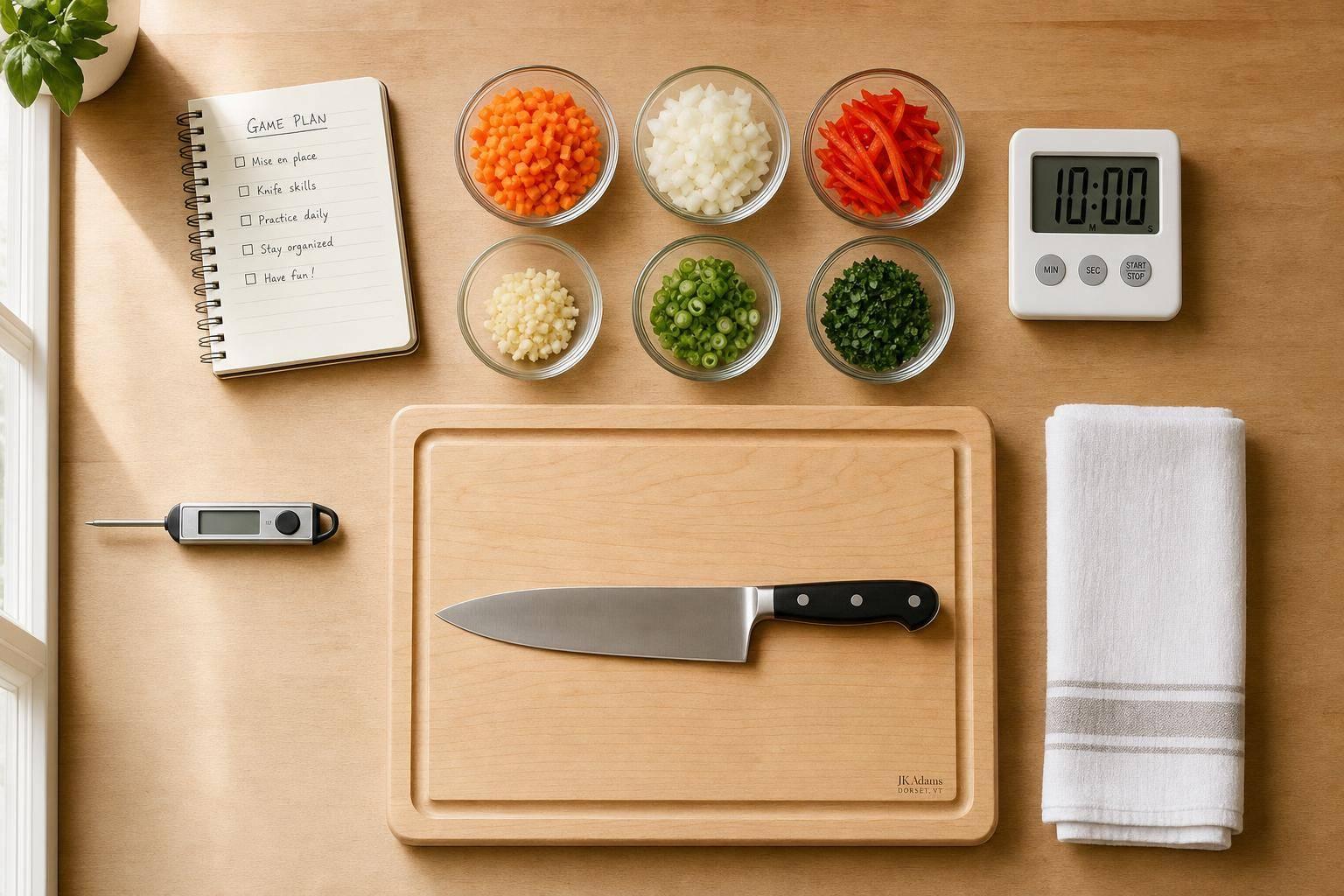
You can start culinary school with zero restaurant experience. Most programs teach beginners from the ground up, but you’ll have an easier first week if you practice a few basics before class starts.
Here’s the short version:
- You do not need kitchen job experience to enroll.
- 71% of culinary graduates in one survey said pre-school restaurant work helped their performance, but it was not required.
- Before day one, I’d focus on knife cuts, measuring, mise en place, recipe flow, and food safety.
- A few home tools go a long way: chef’s knife, digital scale, thermometer, cutting board, pans, and measuring tools.
- New students often struggle most with pace, cleanup, standing for long hours, and culinary math.
- Many labs feel hard at first because students must prep, cook, clean, and reset at the same time.
- Food safety matters right away: keep cold food below 40°F and hot food above 140°F.
If I were starting from scratch, I would keep it simple: practice 3 short sessions a week, do one knife drill, one measuring task, and one full recipe, then clean up on a timer. That builds control, rhythm, and better kitchen habits before school even begins.
I went to a CULINARY SCHOOL so you don’t have to | Cooking Education Summary
sbb-itb-7261261
Quick Comparison
| Area | What matters most before school |
|---|---|
| Experience | None required |
| Skills to practice | Knife work, measuring, mise en place, recipe reading |
| Cooking drills | Roasting, sautéing, braising, baking basics |
| Tools | Knife, thermometer, scale, pans, tongs, whisk |
| Safety | Hand washing, separate boards, temperature control |
| Early challenges | Speed, stamina, cleanup, math, food costing |
| Best approach | Short, repeatable home practice |
The main point is simple: you do not need a restaurant background, but you do need a plan. Start with the basics, practice often, and choose a program that matches your goal.
What you need to know before you enroll
Before you enroll, look at the application steps, financial aid rules, and any placement testing your program uses. Beginner-friendly culinary programs teach the skills needed for entry-level work [1]. Most schools ask for an application, a meeting with an advisor, financial aid forms, and sometimes a placement test. Since some programs do require testing, it’s smart to ask about that before you apply. Once you’ve got that part sorted out, you can focus on finding a program that fits your goals.
Why no restaurant background is required
Culinary schools start with the basics, so you don’t need restaurant experience to begin [1].
"Culinary school will prepare you, but you do need a certain passion and interest in food and hospitality." – Laney College [2]
How to pick the right program for your goal
At that point, focus less on prestige and more on fit. Pick a program based on what you want to do.
If you’re coming from home cooking, look for a program that teaches core kitchen skills first. If your goal is to launch a food business, find one that covers operations, finance, and leadership [1]. Certificate programs are often faster than degree paths.
Once enrollment is clear, start working on the hand skills that will matter on day one.
Kitchen skills to practice at home before day one
Knife cuts, measuring, and mise en place
Keep your practice sessions short. That makes it easier to stay focused on control, accuracy, and staying organized. Start by getting comfortable with a chef’s knife. The point isn’t speed. It’s steady hands and confidence with basic knife work.
Spend time with both imperial and metric measurements too. Culinary school often expects you to move back and forth between the two, and that can throw people off at first. A little practice at home can save you that awkward pause on day one.
Mise en place is the habit that pulls all of this together. Before you cook, read the entire recipe, pull out your ingredients and tools, and measure everything ahead of time. It sounds simple, but it changes how you work in the kitchen.
Once that starts to feel automatic, move on to basic cooking methods.
Basic cooking methods and recipe-following drills
Take one technique at a time and repeat it until it feels natural. Stick with core methods like roasting, sautéing, braising, and seasoning meats and vegetables. It also helps to spend some time on baking and pastry basics, including dough and technique.
Use an instant-read thermometer and practice checking target temperatures in both °F and °C. You’re not trying to master everything yet. You’re just trying to make the tools and numbers feel familiar before lab work starts.
Give yourself a time limit for cooking and cleanup so you can get used to moving with purpose. A book or textbook can help lock in each technique as you go.
Beginner books that build kitchen fundamentals
Two books are worth picking up before you enroll: The Professional Chef from the Culinary Institute of America and On Cooking. Both teach core techniques from the ground up. If you want a more approachable place to begin, Start Here by Sohla El-Waylly is built around recipes that teach cooking science and technique. That’s helpful when you’re trying to get used to terms, methods, and kitchen workflow before class starts.
A simple pace works best here: read one chapter or practice one technique each week instead of trying to do everything at once.
After you know what to practice, the next step is setting up the right tools and habits at home.
Tools, safety habits, and a home practice routine
A short list of tools to start with
You do not need a full kitchen setup to get ready. A small set of good basics is enough to build your core skills before day one.
Start with:
- an 8-inch chef’s knife
- a paring knife
- cutting boards
- an instant-read thermometer
- measuring tools
- a digital scale
- a saucepan
- a sauté pan
- a stockpot or Dutch oven
- tongs
- a whisk
- a peeler
- a spatula
- a bench scraper
Two items are easy to overlook, but they matter a lot: the bench scraper and the digital scale. Both come up often in labs, and both make prep cleaner and more precise.
If you’re going to spend a bit more on anything, start with your knife and thermometer. Those tools do a lot of heavy lifting. Specialty gear can wait.
For a home cook heading into culinary school, these are the basics that count early on. Once you have them, the next step is simple: build habits you can repeat without thinking.
Kitchen safety and food safety basics
In a professional kitchen, two habits matter more than almost anything else: keeping things clean and controlling temperature. Start working on both now.
Wash your hands well before and after handling raw proteins. Use one cutting board for raw meat and another for produce. Clean up right after each task instead of letting the mess pile up.
Temperature matters just as much. The U.S. food safety danger zone runs from 40°F to 140°F [3]. Bacteria multiply fast in that range, so cold foods should stay below 40°F, and hot foods should stay above 140°F. Don’t guess based on color or texture. Use your instant-read thermometer.
Once those habits feel automatic, add short timed drills at home. Practice three sessions a week. In each one, do:
- one knife drill
- one measuring task
- one full recipe from prep through cleanup
Time yourself as you go. The point isn’t to rush. It’s to learn how to move with purpose and keep your station under control.
Home setup versus training kitchen: a side-by-side look
A training kitchen runs on a different scale than a home kitchen, but the jump usually feels smaller than people expect. The same habits still apply. What changes is the pace, the timing, and how clean your workflow needs to be.
| Feature | Home Kitchen | Culinary School Lab |
|---|---|---|
| Tools & Equipment | Chef’s knife, digital scale, basic pans | Specialized industrial equipment and labs |
| Organization | Flexible, based on personal preference | Fixed workstations and assigned prep areas |
| Sanitation | Standard household cleaning | Strict "clean as you go" protocols and professional sanitation standards |
| Pace | Self-paced | Fast-paced, timed production |
If you can practice the basics at home, the lab stops feeling mysterious. It becomes more of a speed and organization test. That’s why these simple home drills matter before classes start. They make the first week in lab much easier to follow.
Early challenges in culinary school and how to handle them
Home Cook vs. Restaurant Worker: Starting Culinary School
What tends to be hard at first
Even if you’ve cooked a lot at home, the first few weeks in lab can feel fast. The biggest surprise for many beginners isn’t the cooking itself. It’s the fact that you have to cook, clean, and reset your station all at once.
Physical stamina is another big adjustment. Many programs run 6 to 8 hours a day, and service shifts can go much longer [4]. Then there’s the classroom side of things. Culinary math and food costing catch plenty of beginners off guard, especially if they expected school to be all knives and sauté pans. In some programs, students need to score 60% to 70% on assessments to be seen as competent [4].
That can feel like a lot at first. But it doesn’t mean you’re in the wrong place. It usually means you’re in the same spot most beginners start in: learning how to keep up.
The answer isn’t talent. It’s repetition.
Daily habits that help beginners improve faster
Small habits make a big difference here.
- Keep a notebook for techniques, timing notes, and instructor corrections.
- Use online theory time to review culinary math and food safety [4].
- Practice the techniques that gave you trouble between classes.
- Get comfortable, closed-toe shoes as early as possible [4].
Short practice sessions at home help more than people think. Repetition builds muscle memory, and that makes lab time feel less rushed.
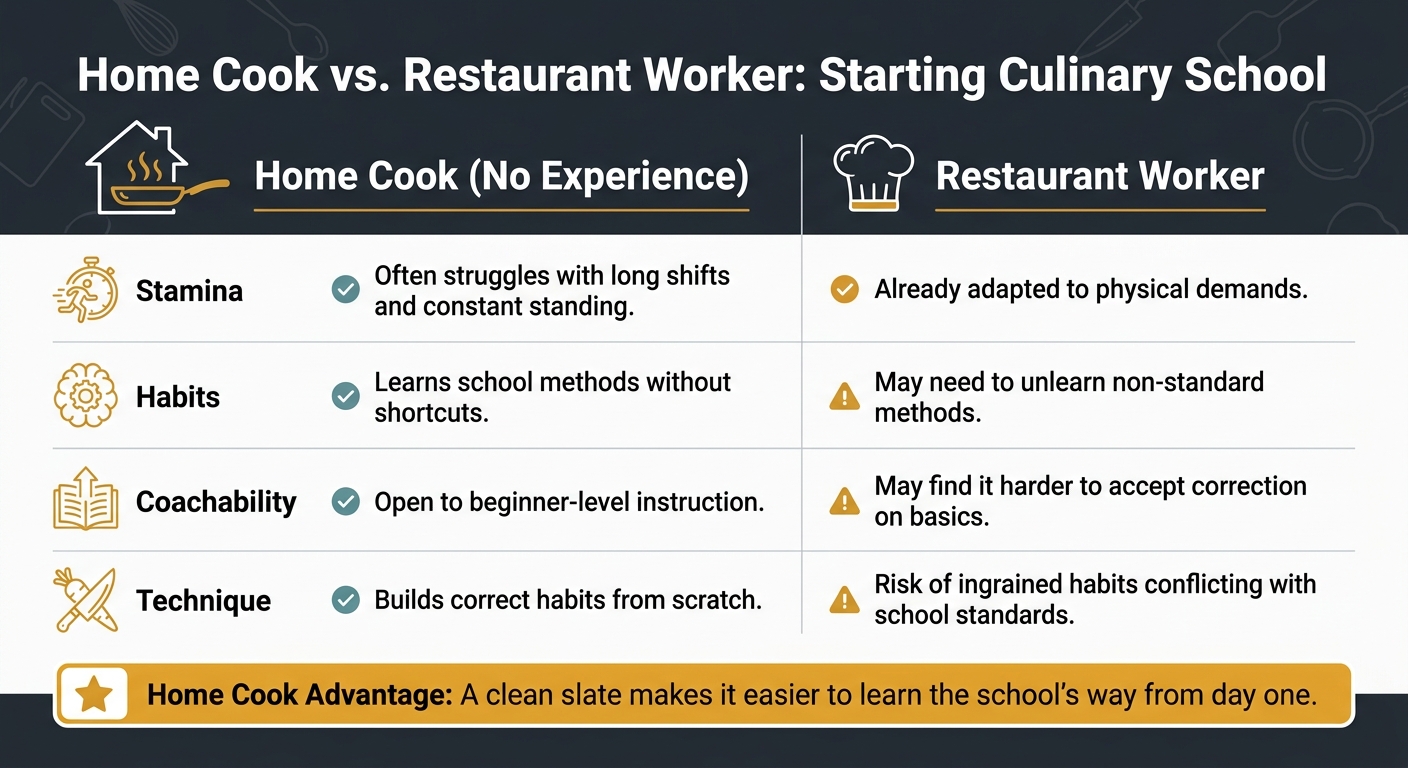
Home cook versus restaurant worker: starting culinary school
Your starting point matters less than how fast you adjust. Some students come in with home cooking experience. Others have worked in restaurants. Each group has its own strengths and weak spots.
| Factor | Home Cook (No Experience) | Restaurant Worker |
|---|---|---|
| Stamina | Often struggles with long shifts and constant standing. | Already adapted to physical demands. |
| Habits | Learns school methods without shortcuts. | May need to unlearn non-standard methods. |
| Coachability | Open to beginner-level instruction. | May find it harder to accept correction on basics. |
| Technique | Builds correct habits from scratch. | Risk of ingrained habits conflicting with school standards. |
A home cook does get one quiet advantage: a clean slate. If you haven’t built years of kitchen shortcuts, it’s often easier to learn the school’s way from day one.
Conclusion: Focus on the basics, practice, and the right program
You do not need restaurant experience to start culinary school instead of being self-taught.
That said, the basics still matter. They make those first lab sessions much easier to follow. Knife skills, measuring, mise en place, and food safety fundamentals give you the repetition that turns simple actions into muscle memory.
Once you have those basics down, pick a program that fits your goals. Program fit matters. Look for one that teaches fundamentals first and lines up with the kind of career you want. This is the first step in learning how to start a career in professional cooking.
Start with the fundamentals, practice often, and let school build the rest.
FAQs
How much should I practice before school starts?
You don’t need job experience before school starts. But if you build a few core habits now, you’ll feel more at ease and have an easier time keeping up once classes begin.
Focus on knife skills, including basic grips and common cuts like julienne and dice. Also spend time on mise en place: read the recipe first, set up your workspace, and prep your ingredients before you start cooking.
The best way to practice is during normal weeknight meals. Do it again and again until it starts to feel automatic.
What if I’m slow in my first lab classes?
If you’re a bit slow in early lab classes, that’s normal. Programs are built for students with different levels of experience, so instructors lean on demos and repeated practice to help everyone build a strong base before the class moves ahead.
Small class sizes can help too. It’s often easier to ask questions, get feedback, and fix small mistakes before they turn into habits.
To build more confidence and speed over time, work on core habits at home, like mise en place and knife skills.
Do I need to buy tools before my program starts?
No. You don’t need industry experience or special tools to get started.
That said, a few basics can make it easier to practice at home and stay on pace in class: a high-quality chef’s knife, a digital thermometer, and a digital scale.
These tools help you build core kitchen skills, including knife cuts, mise en place, and accurate cooking and baking.