



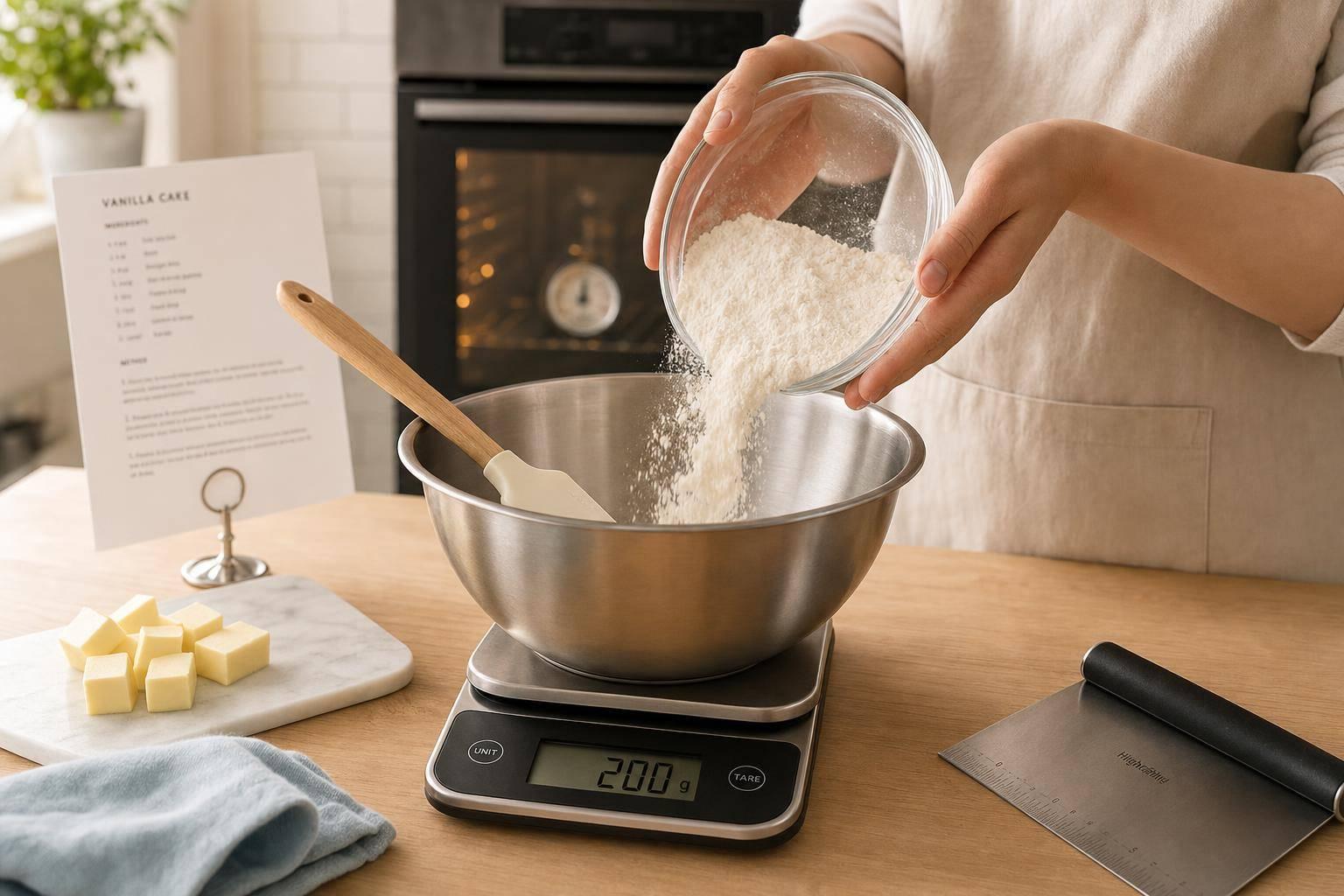
If I learn a few baking basics early, my cookies, cakes, muffins, brownies, and simple pastries come out more even batch after batch.
At the start, I focus on 5 things: reading the recipe first, measuring with care, mixing the right way, handling dough lightly, and using the oven with more control. Those habits fix many beginner problems, like dense muffins, flat cookies, curdled batter, or dry cake.
Here’s the short version:
- Read the full recipe before starting so I don’t miss timing, pan prep, or ingredient order.
- Set up everything first with mise en place so the bake runs smoother.
- Use a digital scale when I can because weight is more exact than cups.
- Bring eggs and butter closer to room temperature so batters mix smoother.
- Mix only as much as needed because overmixing can make baked goods tough.
- Keep dough cool and knead yeast dough only until smooth.
- Preheat the oven fully and use the middle rack for more even baking.
- Watch for visual signs of doneness, not just the timer.
- Practice on one base recipe at a time and change only one part per batch.
A few facts help put this in context. Many home ovens run hot or cool by 25°F to 50°F, which can shift bake time and browning. And even a small flour measuring gap can change texture, since an overfilled cup may add much more flour than planned.
Bottom line: when I build clean habits with measuring, mixing, oven use, and simple finishing, I get better results more often.
| Skill area | What I watch for | Common mistake |
|---|---|---|
| Measuring | Level flour, eye-level liquids, packed brown sugar | Scooping flour straight from the bag |
| Mixing | Smooth batter, fold gently, stop when combined | Overmixing after flour goes in |
| Dough handling | Cool dough, light kneading | Working dough too long |
| Oven use | Full preheat, middle rack, oven thermometer | Trusting the oven dial only |
| Finishing | Cool bake first, keep toppings simple | Frosting while still warm |
That’s the full picture in simple terms, and it covers the main skills new pastry students should build first.
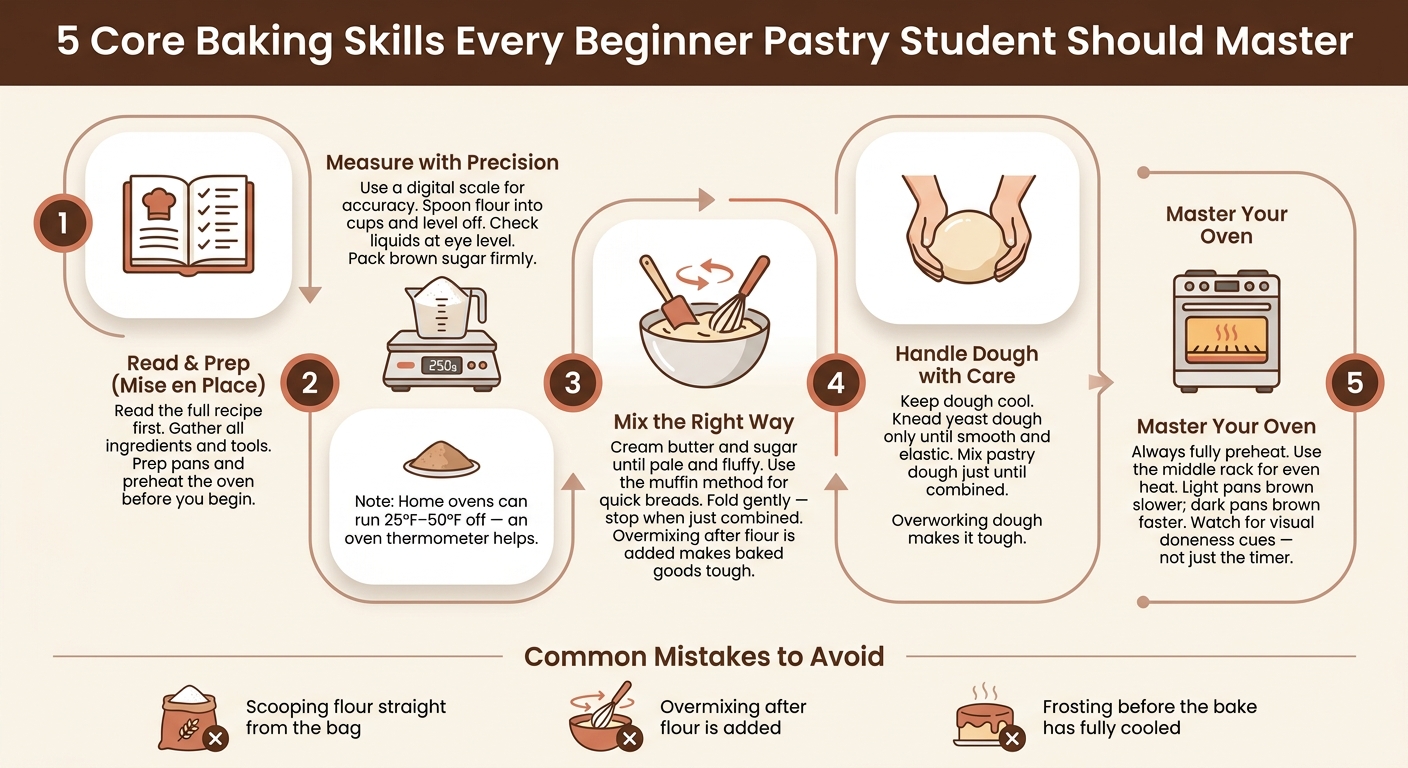
5 Core Baking Skills Every Beginner Pastry Student Should Master
Pastry 101. Beginner’s guide to pastry basic. Everything you need to know as a pastry chef
sbb-itb-7261261
Start with kitchen setup, recipe reading, and accurate measuring
Read the recipe all the way through before you start. That one habit can save you from a lot of mid-bake chaos.
Then set up your station. This is called mise en place: gather the ingredients and tools the recipe calls for, prep the pans, and preheat the oven. Once everything is in place, you can focus on the next step that matters most: measuring ingredients with care.
Why weighing ingredients gives better results than measuring by volume
A digital scale cuts out the variation that comes with cups and spoons. One person’s “cup of flour” can be quite different from another’s, and that small gap can change how a bake turns out.
That’s why a digital kitchen scale is one of the most useful tools a beginner can have.
How to measure flour, liquids, and brown sugar correctly
If you’re using measuring cups, a few small moves make a big difference:
- Spoon flour into the cup and level it off.
- Check liquids at eye level.
- Pack brown sugar firmly into the cup.
After measuring, ingredient temperature becomes the next factor that shapes batter texture.
Ingredient temperature and how it affects batter texture
Room-temperature eggs and butter blend more evenly and help batters emulsify. In plain English, that means the batter mixes into a smoother, more even texture instead of looking curdled or lumpy.
Need to warm up eggs fast? Place them in a bowl of lukewarm water for a few minutes before using.
Core mixing methods and how to handle batters and doughs
How you mix matters just as much as what goes into the bowl. Mixing shapes texture by controlling air and gluten. So even if your measurements are spot on, the way you mix still decides whether you get a tender cake, an even muffin, or a dough that’s easy to work with.
Creaming, muffin method, and folding: what they are and when to use them
Cream butter and sugar until the mixture looks pale and fluffy. That step traps air, which helps give baked goods lift.
Folding is the gentlest way to mix. Use it when you need to add flour or mix-ins to an aerated mixture without knocking out the volume you’ve already built. The key is simple: fold only until combined.
For muffins and quick breads, use the muffin method. Mix the dry ingredients in one bowl and the wet ingredients in another, then stir them together just until no dry flour remains.
A common beginner mistake is overmixing after flour goes in. That’s where texture can go sideways fast. Mix only until the ingredients are just incorporated, especially in delicate batters that rely on trapped air.
Basic dough handling for simple pastries and yeast doughs
Batters need a light touch. Doughs need a bit more control.
For simple pastry and yeast doughs, mix only until combined, keep the dough cool, and stop kneading once it feels smooth and elastic. Push past that point, and you can make the dough tougher than you want.
Once the batter or dough is mixed the right way, the oven takes over.
How to use the oven correctly and tell when baked goods are done
Once your mixing is finished, the oven takes over. This is the stage that shapes how much your bake rises, how brown it gets, and what the final texture feels like.
Oven temperature, pan placement, and bake-time adjustments
Always let the oven preheat all the way before you put anything in. A lot of home ovens run a little hot or a little cool compared with what the dial says, so an oven thermometer can help you check what’s actually going on inside.
For most cookies, cakes, muffins, and simple pastries, the middle rack is your safest bet. It usually gives you the most even heat, which means fewer surprises.
Pan color matters more than many people think too. It can change both browning and timing:
| Factor | Light-colored pan | Dark pan |
|---|---|---|
| Browning | Slower | Faster |
| Bake time | Closer to recipe time | May finish sooner |
A dark pan tends to brown food faster, so don’t be shocked if something is done a bit ahead of schedule. A light-colored pan usually tracks closer to the recipe time.
It also helps to learn your oven’s quirks. Some ovens have hot spots, some brown more in the back, and some seem to take their sweet time. Once you notice those patterns, it gets much easier to adjust future bakes.
How to tell when baked goods are done
Start with the recipe’s cues, then check the bake itself. Look for edges that are set, a surface that looks dry, and a center that springs back or stops jiggling.
After cooling, a simple frosting or glaze can give baked goods a more finished look.
Simple decorating skills and practice habits that help beginners improve
Basic frosting, glazing, and simple cake finishing
Once your bake has cooled, a simple finish can make it look done instead of plain. The good news? It doesn’t take much. Even a basic topping can look neat and polished.
For a cleaner look, stick with finishes like buttercream, glaze, powdered sugar, or a chocolate dip. Small toppings such as candied citrus peel or nuts can also add flavor and a nice visual touch without much extra work.
| Finish | Texture | Best Uses |
|---|---|---|
| Buttercream | Thick, creamy, and pipeable | Layer cakes, cupcakes |
| Glaze | Thin, pourable, often sets with a sheen | Loaf cakes, muffins, cornmeal cookies |
| Powdered Sugar | Light, snowy finish or crackled surface | Crinkle cookies, simple dusting for sweetness |
| Chocolate Dip | Smooth, firm once set | Shortbread or biscotti |
A smooth glaze or an even frosting finish shows care and control. Piping practice also helps with neat borders, simple swirls, and basic decoration. You don’t need fancy designs. Clean, steady work goes a long way.
The best way to get better is to practice these finishes on the same base recipe until they start to feel repeatable. That’s when your hands begin to know what to do.
Practice routines that help pastry students improve faster
Use one base recipe and change just one thing at a time, like the mix-ins, shape, or finish. That keeps the lesson clear. If you change five things at once, it’s hard to tell what helped and what didn’t.
Each round teaches you something about how your dough, batter, and oven behave. Write down the visual and touch-based cues that match a finished bake in your oven, so you can get the same result again.
Conclusion: The baking skills worth learning first
Master these basics first, and every later pastry skill becomes easier to learn.
FAQs
What baking tools should I buy first?
Start with a reliable digital scale. In baking, weight matters. It gives you the precision and consistency that measuring cups just can’t match.
From there, stick with standard, high-quality tools that help you build core skills like creaming, folding, and dough handling. And keep your workspace tidy. A clean, organized setup makes it much easier to track your tools, measure ingredients, and stay in the flow.
How do I know if I overmixed the batter?
Overmixing builds too much gluten. That can turn baked goods tough, rubbery, or dense instead of light and tender. If your batter starts to look extra elastic, stretchy, or heavy instead of smooth and airy, you’ve probably mixed too far.
For muffins or quick breads, stop as soon as the dry ingredients are just moistened. A few streaks of flour are usually a good sign that you’re right at the stopping point.
Why do my bakes turn out differently each time?
Inconsistent results usually happen when precision, environment, or technique shifts from one bake to the next. And since every oven has its own quirks, it helps to watch for visual signs like color and texture instead of trusting the timer alone.
Steady results also come from knowing what each ingredient does, measuring with care, and practicing mise en place so your tools and ingredients are set out before you start.
Ready to build these skills with chef instructors? Explore our Pastry & Baking Certificate and hands-on cooking classes in Salt Lake City and Park City for serious home bakers and food enthusiasts.
Want hands-on feedback on your baking? Look at our Pastry & Baking Certificate, in Salt Lake City or online, or request info and our team will answer your questions.