
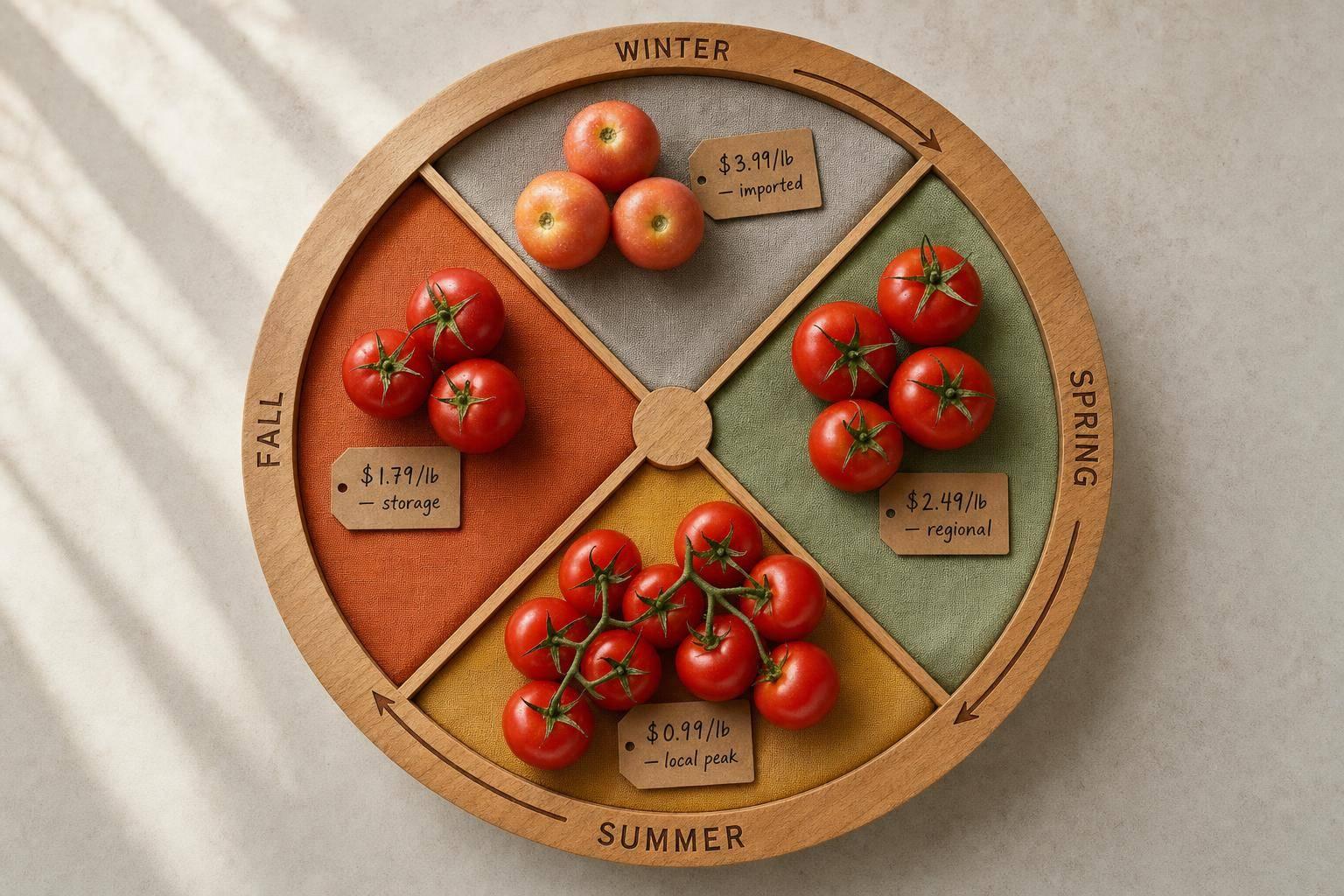
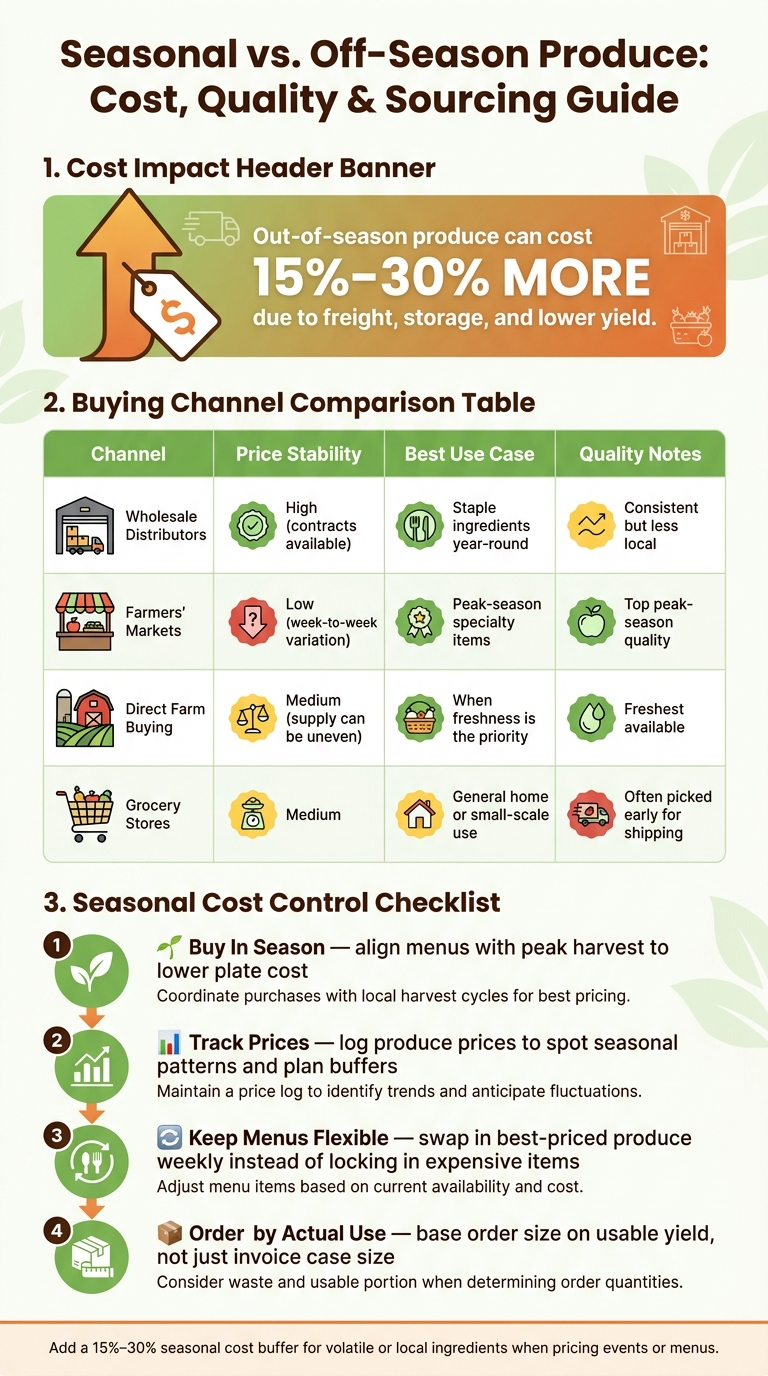
Seasonality changes food cost fast. When produce is in season, supply goes up and prices often drop. When it is out of season, you may pay 15% to 30% more once freight, storage, and lower yield hit the bill.
If I want to keep food cost under control, I need to do four things: buy in season, track prices, keep menus flexible, and order based on actual use. That matters whether I run a kitchen, cook for clients, or plan meals at home.
Here’s the short version:
- Peak harvest usually means lower prices
- Off-season produce often costs more and may have lower usable yield
- Weather can tighten supply and push prices up fast
- Buying channel matters: wholesale, direct farm, farmers’ market, and grocery all affect price and consistency
- Waste turns “cheap” produce into expensive produce
- A cost buffer of 15% to 30% can help protect margin on volatile items
A simple rule: if I build the menu around what is available now, I usually spend less and throw out less.
That is the core idea behind this article: seasonal produce does not just change flavor and selection. It changes what I pay, what I can source, and how much margin I keep.
Seasonal Produce Guide: Tricks, Tools, & Why It Matters
sbb-itb-7261261
How Seasonality Drives Produce Prices
Seasonal vs. Off-Season Produce: Cost, Quality & Sourcing Guide
Produce prices move with the harvest. When a crop hits its peak, supply goes up and prices usually come down. When that same item is out of season, buyers often pay more for imports, cold storage, and long-haul shipping [2][3][6].
Supply, Demand, and Harvest Timing
Harvest timing can change prices fast. A short harvest window often leads to sharp swings, especially for crops that flood the market for only a brief stretch.
Stone fruits like peaches and cherries are plentiful in midsummer, which usually helps bring prices down. Root vegetables, on the other hand, are often cheaper in the fall [5]. Once the harvest slows and supply tightens, prices can climb in a hurry.
A weak harvest in a major growing region can also ripple through the market. If distributors have to buy from other regions to fill gaps, freight bills go up, and buyers may also face higher costs for substitute items [1].
How Buying Channel Affects Price
Where you buy matters just as much as when you buy. The buying channel can soften seasonal swings or make them hit harder.
- Wholesale distributors often give buyers more stable pricing, especially with contracts in place [1].
- Farmers’ markets can offer top peak-season quality, but pricing may change more from week to week.
- Direct farm buying can mean the freshest product, though it tends to work best for operators that can deal with uneven supply [4].
- Grocery stores often land somewhere in the middle, but produce is often picked early so it can survive long-distance shipping, which can affect both quality and value [3][7].
Regional and Seasonal Price Factors in the U.S.
Geography adds one more cost layer. Markets that sit farther from growing regions usually deal with higher freight costs and less room to negotiate on price.
In practice, each channel fits a different need. Wholesale contracts tend to offer the most price stability. Farmers’ markets make the most sense for peak-season items. Direct farm buying is often the better fit when freshness matters more than a fixed, steady supply.
When menus and purchasing plans stay locked in, those seasonal swings can squeeze margins fast.
Cost Problems Caused by Seasonal Produce
Seasonal price swings affect more than what you pay at the supplier. They can eat into margins across the whole operation. For private chefs and small food businesses, that squeeze shows up FAST.
Unpredictable Food Costs and Menu Margins
When produce prices jump, recipe costs go up and menu margins get thinner. A stretch of bad weather in a major growing region can lead to sudden supply shortages, which leaves chefs with two rough options: pay more for substitute items or pull a dish from the menu altogether [1].
That gets even harder when clients ask for produce that’s out of season. One request can throw off the cost of an entire dish, especially if that ingredient plays a big role in the plate.
Off-Season Requests and Higher Purchasing Costs
Out-of-season produce requests are one of the fastest ways to push up a food budget. That produce often travels long distances and gets harvested earlier, which drives up cost and lowers quality [3].
And here’s the part people miss: a low sticker price doesn’t always mean savings. If the product arrives bruised, underripe, or hard to use before it turns, the “deal” can become a loss.
Spoilage and Waste from Poor Buying Decisions
Overbuying during a short harvest window is a common and costly mistake. When a crop floods the market and prices drop, it’s easy to think, buy more now and save later. But without a clear storage and usage plan, extra produce can spoil before it ever makes it to the plate.
That’s why tighter menu planning, price tracking, and waste control matter so much. Small buying mistakes don’t stay small for long.
How to Control Seasonal Ingredient Costs
To protect margins, get ahead of the problem. Control the menu, the supplier mix, and the order size before costs climb.
Build Menus Around In-Season Produce
When prices jump, the fastest move is to let the season guide the menu. Build dishes around what’s at peak harvest and lean on in-season produce to keep plate cost in check.
There’s a simple upside here: peak-season produce usually tastes better and costs less. That gives clients a better plate without putting extra pressure on your food cost. A flexible menu also gives you room to swap in the best-priced produce each week instead of forcing expensive ingredients into every dish.
Track Prices and Add Cost Buffers
After menu planning, pricing history becomes the next checkpoint. Track key produce prices so you can spot seasonal patterns over time. Those price logs make it easier to quote events and plan menus with fewer surprises.
Before you price an event or update a menu, look at that history first. Then add a seasonal buffer – often 15% to 30% above baseline for volatile or local ingredients – to absorb spikes without cutting into your margin [4].
It also helps to subscribe to distributor newsletters and product alerts. That way, you can spot shortages early, before prices jump and substitute options get picked over [1].
Improve Sourcing, Ordering, and Waste Control
Once the menu and pricing are set, tighten up sourcing and receiving. Use a blended sourcing approach: contracts for staples, local farms for peak-season items, and direct buying when freshness matters most. In practice, the right order size matters just as much as the right supplier.
If weather hits a growing region, act early. Don’t sit back and wait for prices to spike. Reach out to regional farms that may still have unaffected supply [1]. During shortages, adjust receiving specs so you can accept usable product instead of losing the order outright. It also makes sense to buy less of off-season items and swap them out when needed.
On the back end, track trim yield and reorder based on actual usable product, not just the case size on the invoice.
Conclusion: Use Seasonal Price Patterns to Plan Better
Seasonal produce affects ingredient cost, margin, and waste. Chefs who plan with seasonality in mind protect their margins and throw out less food. That’s why strong cost control starts with menu planning, not last-minute buying.
The simplest way to keep costs down and cut waste is to line up your menu with produce that’s in season. Put plainly: build seasonality into how you price dishes and how you buy ingredients.
Key Takeaways for Cooks and Culinary Professionals
Buy in season. Track prices. Keep menus flexible. Price with a buffer based on recent history.
If you want more structured training, Park City Culinary Institute offers professional culinary education in menu engineering, forecasting, and budgeting.
FAQs
How do I know when produce is truly in season?
Stay in close contact with local farmers and regional distributors so you can follow the natural rhythm of harvests in your area.
It also helps to check local farmers markets on a regular basis. You’ll start to notice the shift from early-summer greens and radishes to late-summer stone fruits, corn, and tomatoes, and then into fall apples and squash.
Which produce items usually have the biggest seasonal price swings?
Produce with the biggest seasonal price swings often includes brassicas and other cruciferous vegetables. These crops can be hit hard by weather-related supply disruptions, so prices can jump when growing conditions go sideways.
Out-of-season imported produce, like berries and avocados, also tends to cost more when it isn’t grown locally or falls outside its natural harvest cycle.
How can I plan a flexible menu without confusing customers?
Use clear communication and smart menu design. Stay in close contact with suppliers so you can spot availability issues early and agree on high-quality substitutions before they hit your kitchen.
When seasons change and the menu needs to shift, frame those updates as a deliberate move toward freshness and peak flavor. That way, your menu feels like a curated, changing selection, which helps build trust and cuts down on confusion.