



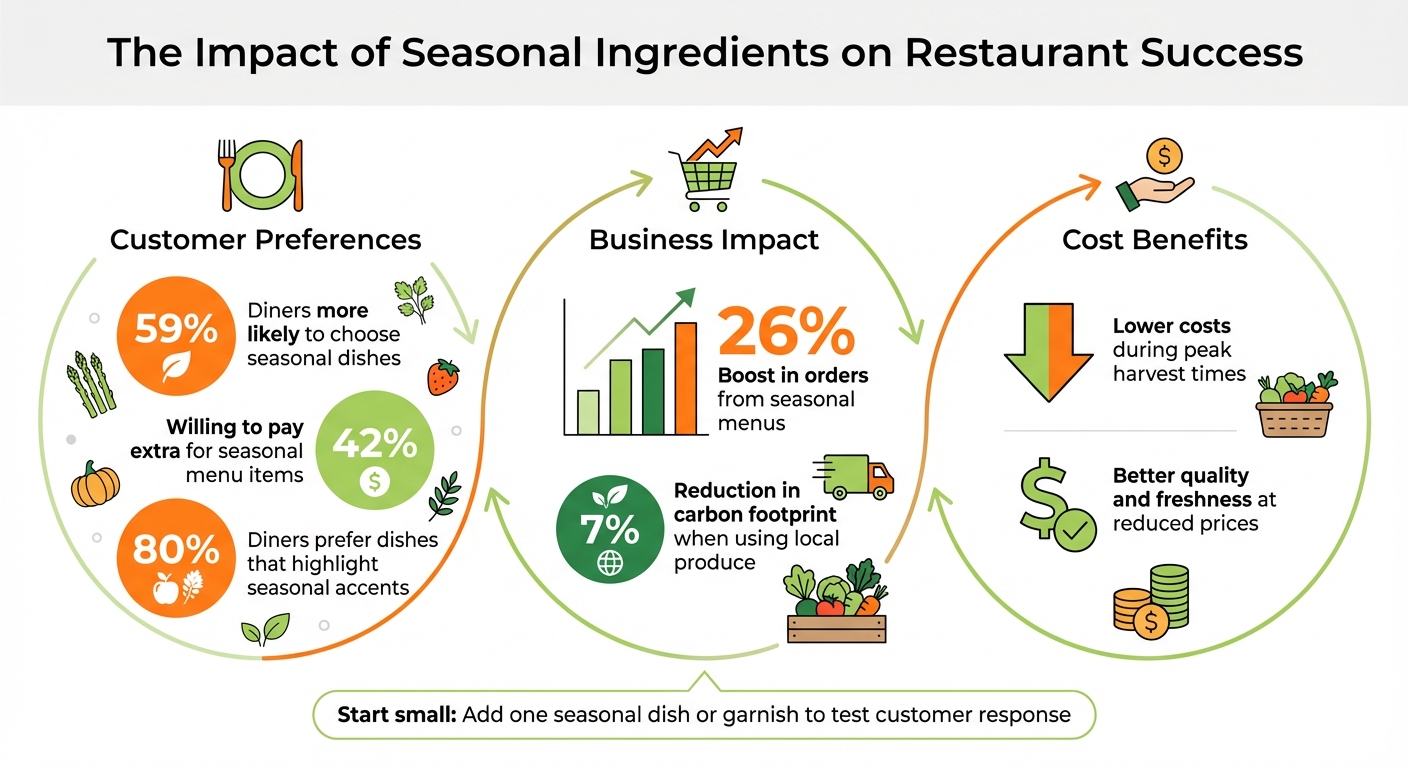
Balancing seasonal and year-round ingredients can save money, boost menu appeal, and meet customer expectations. Seasonal produce is often cheaper, fresher, and preferred by diners, with 59% more likely to choose seasonal dishes and 42% willing to pay extra. Meanwhile, staples like pasta, chicken, and rice ensure consistency and reliability. Here’s how to strike the right balance:
- Know your regional seasonal calendar: Use tools like the Seasonal Food Guide to plan around local harvests.
- Build core dishes with year-round staples: Create flexible recipes that adapt to seasonal changes without overhauling your menu.
- Use seasonal ingredients as accents: Add seasonal touches to sauces, sides, or garnishes for variety and visual appeal.
- Time purchases for savings: Buy produce at peak harvest for lower costs and better quality.
- Preserve seasonal produce: Freeze, pickle, or dry ingredients to extend their use beyond the season.
These strategies can keep your menu dynamic, cost-effective, and aligned with customer trends. Start small by incorporating one seasonal dish or garnish and build from there.
Benefits of Seasonal Ingredients: Key Statistics for Restaurant Menu Planning
Cooking With the Seasons: A Chef’s Guide
1. Know Your Regional Seasonal Calendar
Getting familiar with what grows in your region – and when – is the foundation of effective menu planning. Local farmers’ markets, greenmarkets, and farm stands are excellent places to find produce that’s often harvested just hours before being sold[1][6].
For more detailed planning, tools like the Seasonal Food Guide and the Sustainable Table database[1][5] can help you search for produce by state and month. Additionally, culinary resources such as Bon Appétit and Martha Stewart publish monthly guides highlighting the best seasonal ingredients[7]. As Marque Collins, Executive Chef at Tullibee, explains:
"In-season fruits have a depth and brightness of flavor that out-of-season produce just can’t compare to"[7].
Use this knowledge to connect with local growers for the freshest ingredients. Following farms on social media or chatting with market vendors can provide real-time updates on current harvests and availability[6]. This not only ensures better flavor and freshness but can also cut your food’s carbon footprint by up to 7%[6].
It’s also worth noting that some staples, like apples, carrots, and potatoes, are available year-round thanks to modern storage methods. Similarly, fall-harvested produce like rutabagas can stay fresh well into winter[7]. Knowing these details helps you balance cost, quality, and sustainability while making the most of local produce.
2. Create Core Dishes Using Year-Round Staples
Once you’ve got your regional seasonal calendar ready, it’s time to craft a menu that balances consistency with the excitement of seasonal changes. The trick? Build your dishes around staples that are available all year long. Think dried pasta, whole grains like farro and barley, meats (chicken, beef, pork, fish), and aged cheeses. These ingredients provide a reliable base for your menu while letting you switch things up with seasonal additions.
For example, create flexible recipes that evolve with the seasons. A signature ravioli can feature butternut squash in the winter, then transition to fresh peas or summer squash in the spring. As Dan Simons of VSAG puts it:
"You don’t need to change the entire dish – just swap the seasonal filling" [3].
This approach keeps your menu fresh without overcomplicating things.
Batch-cooked items like soups, stews, and pot pies are also perfect for seasonal tweaks. A simple chicken soup can get a springtime upgrade with asparagus, a summer lift with sweet corn, or a fall makeover with root vegetables. Grubhub’s State of the Plate report highlights butternut squash soup as one of the most popular winter dishes [2], proving how seasonal touches can turn a staple into a standout.
Don’t forget the pantry essentials that pack a punch – garlic, anchovies, olives, butter, and toasted nuts. These flavor boosters can elevate your core dishes and complement seasonal ingredients in sauces, garnishes, or sides. In fact, 80% of diners prefer dishes that highlight seasonal accents [4]. Stocking up on non-perishables like flour, oil, and canned goods in bulk can also cut costs and ensure you’re always ready to deliver your menu’s foundation.
3. Add Seasonal Ingredients as Accents
Bringing seasonal variety into your menu doesn’t mean overhauling your entire lineup. Instead, use seasonal ingredients as accents to complement your core dishes. This way, your staples remain recognizable while gaining a fresh, timely twist. For instance, a classic roasted chicken entrée can feel new when paired with a winter squash purée that reflects the season’s flavors. This approach keeps your dishes familiar while subtly weaving in the essence of the season.
Think of seasonal produce as flavor enhancers. During fall and winter, a maple glaze can add a cozy warmth to roasted chicken or fish without overpowering the dish. As Unilever Food Solutions puts it:
"Maple can be added to roasted chicken and fish, or it can be used to highlight seasonal produce like squash and sweet potatoes" [9].
This layering technique not only keeps your menu consistent but also adds a dynamic element that keeps repeat customers intrigued.
Seasonal ingredients also bring a visual flair to your plates. Fall produce like pumpkin, butternut squash, and beets contribute rich hues – vibrant oranges, deep purples, and earthy greens – that naturally catch the eye and signal freshness [8][9]. Plus, produce harvested at its peak offers bolder flavors and better nutrition, enhancing the overall dining experience.
Your garnishes, sauces, and sides are perfect opportunities to weave in these seasonal touches. A sprinkle of fresh herbs can brighten a pasta dish in spring, while a corn salsa adds a pop of summer to proteins you serve year-round. In colder months, swap lighter pasta salads for baked dishes featuring hearty root vegetables to satisfy diners craving warm, comforting flavors [9].
Using seasonal produce also makes financial sense. Ingredients available at peak season are typically more affordable because they don’t come with the added costs of greenhouse growing or long-distance shipping [9]. By incorporating these ingredients as accents rather than main features, you can add perceived value to your dishes while keeping food costs in check. This strategy also allows you to maintain your signature offerings, even when certain crops are out of season.
Chefs trained at Park City Culinary Institute often rely on this method to keep their classic dishes fresh, relevant, and aligned with the changing seasons. It’s a smart way to balance tradition with innovation.
sbb-itb-7261261
4. Time Your Purchases for Best Prices
Buying seasonal produce when it’s most plentiful is a smart way to cut food costs. During peak harvest times, farmers and distributors have an abundance of goods, which naturally drives prices down [2]. To take advantage of this, figure out the peak seasons for produce in your area. Tools like the Seasonal Food Guide can help, offering insights on over 140 types of produce across all 50 U.S. states [5][11]. Timing your purchases this way not only saves money but also opens the door to stronger relationships with suppliers.
Building direct connections with local suppliers can be a game-changer. These relationships often provide real-time updates on harvests and can lead to better price negotiations [8]. Keeping an eye on local farms’ social media accounts is another great way to stay informed about harvest schedules and price changes [6]. Grubhub highlights the benefits of this approach:
"Cooking with seasonal ingredients that are more abundant during peak times curbs high supply costs because farmers and distributors have larger bounties to sell" [2].
Once you’ve secured your produce, proper storage is essential to maximize freshness and minimize waste. For example, remove the green tops from carrots, beets, and radishes as soon as you get them – the leaves draw moisture from the roots, which can cause them to soften quickly [7]. Store berries unwashed and loosely covered until you’re ready to use them to prevent spoilage from excess moisture [7]. If you’re buying in bulk, consider blanching and freezing hardy greens, or try pickling and canning tomatoes and root vegetables to extend their shelf life [1].
To keep the savings going, it’s important to monitor demand and manage inventory effectively. Inventory management software can help track sales trends and forecast demand, ensuring you don’t over-order [2]. Tools like Datasembly provide hyperlocal pricing data [10], giving you a heads-up on price shifts so you can adjust before they impact your costs.
5. Preserve Seasonal Ingredients for Later Use
Preserving seasonal produce allows you to enjoy their peak flavors and nutrients long after the season ends. Freezing is a popular option that helps maintain flavor and nutritional value. However, keep in mind that frozen produce often has a softer texture, making it ideal for smoothies, baked goods, soups, and sauces rather than raw dishes. As Dana Angelo White, M.S., R.D., A.T.C., from Food Network explains:
"Frozen produce won’t have the same texture as fresh, so frozen stuff is best used in particular recipes" [15].
Before freezing most vegetables, blanching is a crucial step. This process stops enzyme activity that can cause flavor and color loss over time. It also brightens colors and makes peeling fruits like peaches and tomatoes much easier [12][15]. After blanching, quickly cool the produce in ice water and drain thoroughly – especially for delicate leafy greens [1].
Pickling is another excellent way to preserve vegetables, transforming items like turnips, beets, corn, and carrots into tangy additions for salads or garnishes [1]. Drying is also effective, concentrating flavors and creating long-lasting items like dried herbs or zucchini chips. To prevent mold, ensure nearly all moisture is removed. A dehydrator speeds up this process, taking 6–8 hours compared to the two weeks required for air-drying, and it keeps your kitchen cool during summer [13][16].
When freezing fruit, spread berries or sliced pieces in a single layer on a cookie sheet until firm, then transfer them to freezer bags [14][15]. For herbs, chop and freeze them in ice cube trays with water or oil for easy use in soups and stews [15][16]. To prevent freezer burn, store frozen items at the back of the freezer, where temperatures remain more consistent [15]. For the best flavor and quality, aim to use your home-preserved foods within 12 to 18 months [17].
Preserving seasonal ingredients also expands your cooking options year-round. For example, roast canned tomatoes with garlic for a quick burst of flavor, or blend jarred peppers into a rich romesco sauce [1]. During the summer, freeze roasted vegetable purees to add depth to winter soups and chilis [14]. These techniques ensure that the essence of each season continues to enhance your meals, no matter the time of year.
Conclusion
Balancing seasonal and year-round ingredients can completely change the way you approach menu planning. By focusing on peak-flavor produce when it’s in season, you not only enhance the taste of your dishes but also save money. Building your menu around staples like grains, pasta, and proteins provides a reliable foundation, while seasonal accents – whether in sauces, sides, or garnishes – keep things fresh and exciting without requiring a full menu revamp. Buying in bulk during harvest periods and using preservation methods like freezing, pickling, or drying ensures those vibrant flavors last well beyond the season.
These approaches don’t just cut costs – they also help reduce food waste and strengthen your reputation for quality and thoughtful sourcing. In fact, seasonal menus have been shown to boost orders by 26% [19], directly contributing to profitability.
If the idea of a fully seasonal menu feels daunting, start small. Try introducing one seasonal dish or swapping out a garnish to test the waters. Use your POS data to identify what resonates with your customers, and connect with local farmers to stay ahead of harvest cycles.
For those looking to take these strategies to the next level, professional training can provide the tools and confidence needed. Programs offered by Park City Culinary Institute, such as the Cuisine Certificate (108 hours of hands-on training) or the Culinary Operations Management Program, are designed to refine these techniques. With instructors averaging over a decade of industry experience and a six-year streak as "Best of State in Culinary Education" (2019–2024) [18], the institute delivers actionable insights that can elevate your culinary operations.
Whether you’re managing a restaurant, running a catering business, or simply experimenting in your home kitchen, these strategies provide a clear path to creating menus that are dynamic, cost-effective, and reflective of each season’s finest offerings.
FAQs
How can I find the best time to buy seasonal produce?
The smartest way to figure out when to buy seasonal produce is by using a seasonal produce calendar tailored to where you live. These handy guides break down which fruits and vegetables are at their best each month, based on local harvest times. You can even find apps and online tools that let you search by state or zip code for more precise advice.
Another approach? Trust your senses. Look for produce with bright colors, firm textures, and fresh aromas – all signs of peak ripeness. Farmers’ markets are also a great clue; when prices drop, it often means there’s an abundance of freshly harvested goods. Not sure what’s in season? Ask the vendors or even the produce manager at your local grocery store – they’re usually happy to help.
At Park City Culinary Institute, we teach students how to spot and cook with the freshest seasonal ingredients. Our hands-on workshops focus on crafting menus that not only highlight peak flavors but also help you manage costs effectively.
How can I easily add seasonal ingredients to my menu?
Adding seasonal ingredients to your menu doesn’t have to be overwhelming – it’s about making small, intentional updates. One simple change is to swap year-round staples for fresh, in-season produce. For instance, instead of out-of-season tomatoes, try using summer corn or snap peas. These bring a sweet, satisfying crunch to dishes like salads or tacos. Seasonal fruits like strawberries or apples can also be incorporated into sauces, desserts, or vinaigrettes, delivering brighter flavors while potentially saving on costs.
You could also feature a rotating seasonal dish that showcases local, in-season ingredients. This approach keeps your menu dynamic without requiring a complete overhaul. If you find yourself with extra seasonal produce, think about preserving it through freezing or pickling. These methods allow you to enjoy those flavors later in soups, stews, or side dishes.
If you’re looking to expand your skills, the Park City Culinary Institute offers workshops focused on creative ways to use seasonal ingredients. It’s a great opportunity to keep your menu interesting and packed with fresh ideas all year long.
What’s the best way to preserve seasonal produce for year-round use?
Preserving seasonal produce is a great way to keep those fresh flavors alive throughout the year. For vegetables, the process starts with blanching – briefly boiling them, then plunging them into ice water to stop the cooking process. Once cooled, dry them thoroughly before freezing in airtight containers or bags. When it comes to fruits like berries, you can freeze them raw. To avoid clumping, spread them out on a tray first, freeze them individually, and then transfer them to a container.
Canning is another excellent method for long-term storage. High-acid foods, such as tomatoes and peaches, can be safely preserved using a water-bath canning method. On the other hand, low-acid vegetables, like carrots, require pressure canning to ensure safety.
If you prefer a simpler approach, consider freezing bulk produce straight from the farmers’ market. Divide it into meal-sized portions, vacuum-seal if you can, and organize your freezer using the "first-in, first-out" system to minimize waste. Dehydrating is another option, especially for herbs, greens, or mushrooms. Once dried, store them in sealed jars in a cool, dark pantry to maintain their flavor.
For those who want to learn the ropes, Park City Culinary Institute offers workshops and online lessons. With award-winning chefs leading the way, you can master techniques like freezing, canning, and more with hands-on guidance.
Want to cook with the seasons alongside a chef? Join a hands-on cooking class in Salt Lake City or Park City, or request info about our Cuisine Certificate and online culinary courses.