
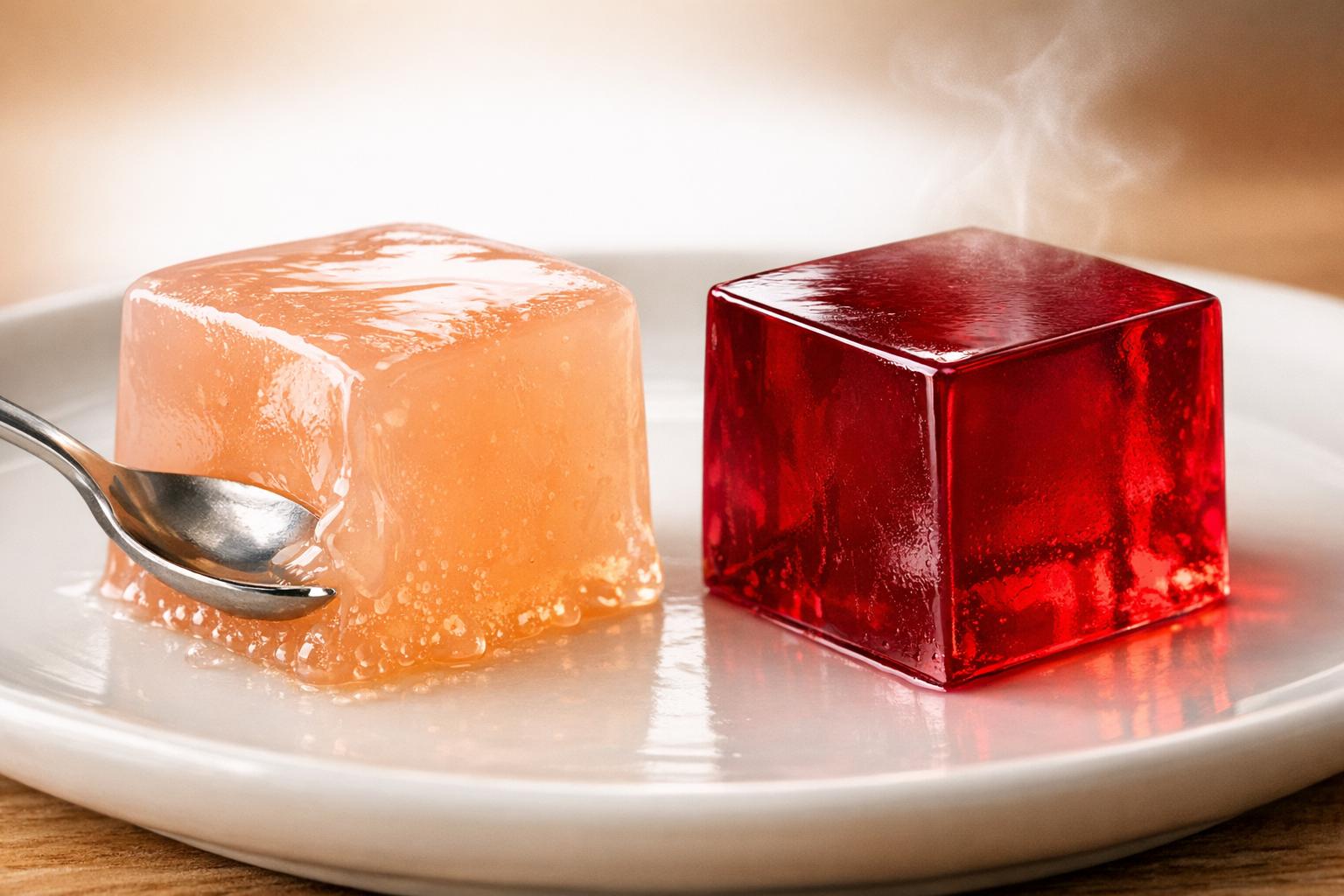
Thermoreversible gels like gelatin and agar melt when heated and reset as they cool, making them ideal for desserts like panna cotta or sauces that need to flow when served warm. Thermoirreversible gels, such as pectin and sodium alginate, maintain their structure even under high heat, perfect for jams, baked goods, or dishes requiring stability during cooking.
Key Points:
- Thermoreversible gels: Melt and reset with temperature changes. Great for cold desserts and fluid gels.
- Thermoirreversible gels: Stay firm under heat. Best for jams, gravies, and baked fillings.
- Both types can mute flavors, so stronger seasoning is often needed.
Quick Comparison:
| Feature | Thermoreversible Gels | Thermoirreversible Gels |
|---|---|---|
| Melting Behavior | Melts when heated | Remains solid under heat |
| Temperature Stability | Limited | High |
| Common Examples | Gelatin, agar, carrageenan | Pectin, sodium alginate |
| Best For | Cold desserts, sauces | Jams, baked goods, gravies |
Choosing the right gel depends on your dish’s temperature needs and desired texture. Read on to learn how each type works and where they excel.
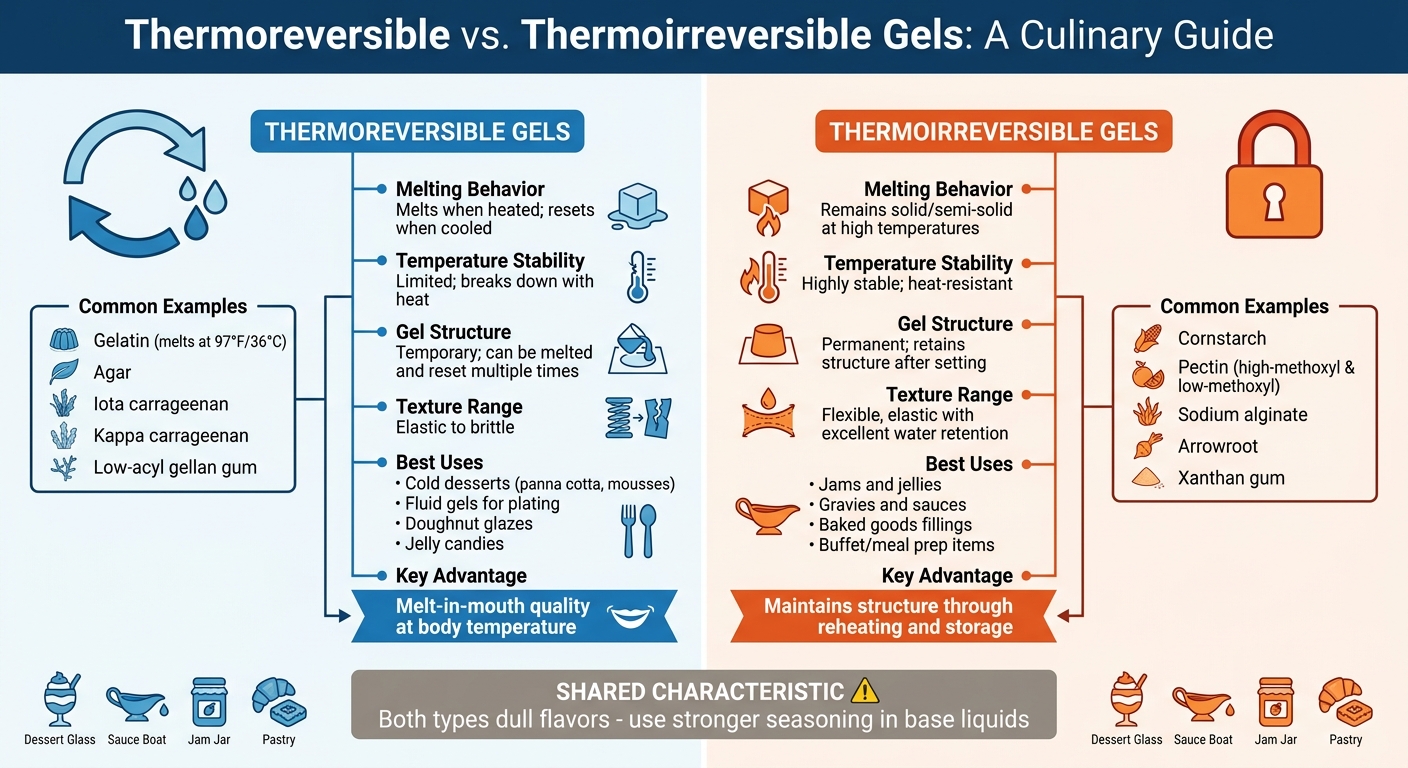
Thermoreversible vs Thermoirreversible Gels Comparison Chart
What Are Thermoreversible Gels?
Thermoreversible gels are hydrocolloids that shift between liquid and gel states based on temperature. When cooled, they form a gel, and when heated, they return to a liquid state. This reversible process gives chefs precise control over texture, as these gels create a three-dimensional matrix that traps water, providing structure and body while still maintaining a primarily liquid composition [1].
The behavior of thermoreversible gels is tied to specific temperature ranges. For example, gelatin melts at around 97°F (36°C), giving it a melt-in-the-mouth quality that’s perfect for dishes like mousses and panna cotta [2][1]. As Charlotte Brown, author of Cuisine Tech, explains: "Heat-activated gels like gelatin and agar require dissolving in hot liquid before setting as they cool" [1].
The melting point of each gel determines its best use. Agar, for instance, forms firm, heat-stable gels that hold their structure even at room temperature or higher. This makes it an excellent choice for applications like doughnut glazes or hot icings [1].
Common Thermoreversible Gels
Several key examples showcase the versatility of thermoreversible gels:
- Gelatin: This animal-derived gel is a go-to for creating elastic, delicate textures in desserts like marshmallows and panna cotta. It delivers a signature melt-in-the-mouth experience [1].
- Agar: Extracted from red algae, agar forms firm, heat-resistant gels. It’s highly versatile, with recommended concentrations ranging from 0.2% for hot flat icings to 0.5–1.0% for doughnut glazes, and up to 0.3–1.8% for structured jelly candies [1].
- Iota carrageenan: Derived from red seaweed, this gel creates soft, elastic textures, making it ideal for dairy-based desserts and puddings [1].
- Kappa carrageenan: Also from red seaweed, kappa carrageenan produces firm, brittle gels, often used in vegan cheeses and dairy applications [1].
- Low-acyl gellan gum: Known for its firm, brittle, and clear gels, this gel is popular in modernist cuisine for fluid gels and precise plating techniques [1].
Benefits of Thermoreversible Gels
The unique properties of thermoreversible gels offer a range of practical advantages. Their reversibility allows for multiple melting and resetting cycles without compromising their gelling ability. This makes them particularly forgiving during preparation and service.
Temperature control becomes a creative advantage. Gelatin’s low melting point ensures it releases flavors smoothly on the palate, while agar’s heat stability prevents weeping or cracking in warm conditions [1]. This reliability allows chefs to predict how a dish will hold up from plating to service, whether they’re crafting a delicate dessert or a sturdy confectionery piece.
sbb-itb-7261261
What Are Thermoirreversible Gels?
Thermoirreversible gels are gels that permanently set and maintain their structure, even when reheated. In starch-based systems, this process happens through gelatinization. When starch granules are heated in the presence of water, they absorb liquid, swell, and form a thick, transparent texture [3].
In baking, these gels play a key role by adding bulk and helping create a tender crumb [3]. Their ability to hold up under high heat makes them especially useful in various culinary applications.
Common Thermoirreversible Gels
- Cornstarch: Known for creating translucent, glossy sauces and gravies, cornstarch forms a gel that can be sliced when prepared correctly. However, over-boiling (more than 5 minutes) can break down the starch, causing the mixture to thin. To avoid lumps, always mix cornstarch with cold liquid before heating [4].
- Pectin: Available in two main types:
- High-methoxyl pectin works best for jams and jellies, requiring a high sugar content (over 60% by weight) and a low pH (2.8–3.5) to set [5].
- Low-methoxyl pectin, on the other hand, sets with calcium instead of sugar. This variety is favored in modern molecular gastronomy for its heat-resistant and stable properties [3].
"Pectin offers a clean cut. It is tender and breaks apart easily without resistance. Because it does not melt in the mouth… the flavor release is almost instantaneous and sharp" [5].
Unlike thermoreversible gels, pectin-based structures remain stable through repeated heating, making them ideal for long-term use.
- Arrowroot: Derived from cassava, arrowroot creates clear, light gels commonly used in Asian dishes. It works particularly well in cold applications [3]. Modified and pre-gelatinized starches, which are extensions of this concept, can thicken liquids at any temperature without additional cooking. This is especially useful for preserving the color and flavor of ingredients sensitive to heat [3].
Why Thermoirreversible Gels Matter
Thermoirreversible gels offer unique advantages in the kitchen. Their stability at serving temperatures makes them perfect for buffet setups, meal prep, or any scenario where food needs to stay warm for extended periods [3]. This heat resistance is especially critical for dishes intended for tropical climates or non-refrigerated environments, where thermoreversible gels would melt [5].
Another benefit is their versatility in storage. These gels don’t depend on specific temperature ranges to maintain their structure, allowing dishes to transition seamlessly from the fridge to the microwave to the table without losing their texture. This reliability is why cornstarch-thickened gravies and pectin-set jams are staples in both home cooking and professional kitchens.
Key Differences Between Thermoreversible and Thermoirreversible Gels
Thermoreversible gels are unique in their ability to melt when heated and reset once cooled. In contrast, thermoirreversible gels hold their structure even under high temperatures, making them highly reliable in heat-intensive scenarios[6].
Thermoirreversible gels are especially useful in applications requiring thermal stability, such as noodles or rice-based products, thanks to their flexibility and ability to retain water. On the other hand, thermoreversible gels shine in dishes that benefit from their "melt-in-the-mouth" quality, like panna cotta or aspic, which soften at body temperature.
However, both types of gels share a common drawback: they tend to mute flavors. Cole Whitney from Kitchen Alchemy highlights this challenge:
"Gels have a tendency to dull flavors, so do your best to make this liquid as flavorful as it can be"[7].
To counteract this, it’s essential to season base liquids more aggressively when working with either type of gel[7].
Another key distinction lies in their preparation methods. Thermoreversible gels set as they cool after being heated, while thermoirreversible gels rely on specific chemical triggers, such as calcium for sodium alginate or certain pH and sugar levels for pectin, to achieve their firm structure[1].
Comparison Table: Thermoreversible vs. Thermoirreversible Gels
| Feature | Thermoreversible Gels | Thermoirreversible Gels |
|---|---|---|
| Melting Behavior | Melts when heated; resets when cooled | Remains solid or semi-solid at high temperatures |
| Temperature Stability | Limited; breaks down with heat | Highly stable, suitable for heat-resistant foods |
| Gel Structure Permanence | Temporary; can be melted and reset | Permanent; retains structure after setting |
| Texture | Elastic (e.g., gelatin) to brittle (e.g., agar) | Flexible, elastic, with excellent water retention |
| Flavor Impact | Dulls flavors; requires strong seasoning | Dulls flavors; requires strong seasoning |
| Compatibility | Sensitive to heat; may need specific additives | Works well in high-temperature processes |
| Common Examples | Gelatin, agar, carrageenan, pectin | Sodium alginate, konjac gum, curdlan gum, gellan gum |
Understanding these differences is crucial for choosing the right gel type for specific culinary needs, as the following sections will explore.
Best Uses for Thermoreversible Gels
Thermoreversible gels are a game-changer for recipes that require precise melting points and flawless presentation. Their unique ability to melt and reset upon cooling makes them perfect for dishes where stability during preparation is key, yet a smooth texture is essential when served. Chefs from the Park City Culinary Institute often use these techniques to enhance the visual and textural appeal of desserts.
Pastry and Plated Desserts
Thermoreversible gels shine in layered pastries and fillings due to their ability to hold their shape while being easy to pipe. A great example comes from Modernist Pantry‘s Fruit Fluid Gel Kouign-Amann, showcased in June 2020. Here, chefs added a dollop of citrus- or berry-based fluid gel to the center of buttery puff pastries. This added a bright, acidic note that balanced the richness of the pastry without making it soggy. Another standout example is Irish Cream Filled Marshmallows, where fluid gel is used to pipe Irish cream into marshmallow molds, creating a sophisticated twist on s’mores.
To avoid issues like syneresis (the unwanted weeping of liquid), a touch of xanthan gum can help stabilize the gel. For dairy-based gels, melting salts such as sodium citrate are useful to keep proteins from clumping. These techniques highlight the precision thermoreversible gels offer, blending functionality with stunning presentation.
Molecular Gastronomy Techniques
Thermoreversible gels also play a pivotal role in molecular gastronomy, where their unique properties allow for creative plate designs. These gels hold their shape until disturbed, at which point they flow like a smooth sauce. Cole Whitney from Kitchen Alchemy explains:
"A fluid gel can be used to decorate plates without the worry of the strategically placed dots running all over the plate. But as we said before once they are eaten they become a fluid sauce." [7]
A fantastic example is Modernist Pantry’s Tzatziki Fluid Gel, which reimagines the bold flavors of traditional tzatziki in a stable, silky gel that holds its form on the plate. To ensure the flavors remain vibrant, it’s a good idea to season the base liquid more intensely, as some flavor can get muted during the gelling process.
These applications demonstrate how thermoreversible gels can elevate both traditional and modern culinary techniques, offering chefs unmatched control and creativity.
Best Uses for Thermoirreversible Gels
Thermoirreversible gels are prized for their heat stability and ability to maintain structure over time. By forming a three-dimensional network that traps water, they help prevent sauces and fillings from separating or becoming watery [1]. These qualities make them a go-to choice in both savory dishes and baked goods.
Sauces and Gravies
In savory recipes, thermoirreversible gels are key to achieving consistent textures and dependable stability. For example, xanthan gum is an excellent thickener for sauces and dressings. It works effectively at low concentrations, providing thickness while staying stable during reheating or extended storage [1]. Charlotte Brown, a contributor to Cuisine Tech, highlights that xanthan gum "increases viscosity without setting completely – ideal for velvety sauces and fluid creams" [1].
For commercial kitchens and frozen meals, locust bean gum is a standout option due to its strong water-binding ability and freeze-thaw stability. It’s often paired with carrageenans and xanthan gum to create a robust texture [1]. These gels can withstand high cooking temperatures and prolonged exposure to heat lamps, ensuring sauces and gravies remain intact and visually appealing.
Baking Applications
Thermoirreversible gels also shine in baking, where they help maintain structure and prevent unwanted texture changes. Agar, for instance, is a game-changer for doughnut glazes. At concentrations of 0.5–1.0%, it minimizes chipping, cracking, and weeping, providing a smooth and stable finish. For hot flat icings, as little as 0.2% agar is enough to ensure long-lasting stability [1].
In fruit fillings, pectin-based mixes deliver a reliable set, preventing the filling from running during baking. They also retain moisture, stopping liquids from soaking into the surrounding pastry or crust [1]. For gluten-free baked goods, xanthan gum plays a crucial role. It improves stability and prevents syneresis (the separation of liquid), even at low concentrations, making it easier to achieve consistent results [1].
How to Choose the Right Gel
Factors to Consider
When selecting a gel, think about how it will perform under specific conditions like temperature and storage. Temperature stability is a major factor. If your dish needs to stay firm during cooking or under warming lamps, opt for thermoirreversible gels like sodium alginate, curdlan gum, or gellan gum. These gels hold their structure even when exposed to heat [6]. On the flip side, for cold desserts that need to melt pleasantly in the mouth, thermoreversible gels like gelatin are the way to go.
Acidity and ingredient compatibility also play an important role. For example, pectin works best with specific sugar levels and low pH, making it a go-to choice for fruit-based recipes like jams or pâtes de fruits [1]. Meanwhile, iota carrageenan pairs well with calcium, making it ideal for creamy puddings and custards. If you’re dealing with frozen foods, locust bean gum ensures smooth textures by preventing ice crystal growth and handling freeze-thaw cycles effectively [1].
Another aspect to watch for is syneresis, which is the unwanted separation of liquid from a gel. Agar is great for minimizing this issue in items like doughnut glazes and icings [1]. For sauces and dressings that need to stay smooth without becoming fully set, xanthan gum is a reliable option. It thickens at low concentrations while also preventing syneresis during storage [1].
By evaluating these factors, you can confidently select the right gel for your dish’s unique needs.
Dish-Specific Gel Choices
Let’s break it down by application to see how these gels shine in different dishes:
For plated desserts such as panna cotta, gelatin is a classic choice, offering a smooth, melt-in-the-mouth texture at body temperature [1]. If you’re creating modernist presentations, low-acyl gellan gum provides firm, clear gels that hold their shape beautifully on the plate [1].
In savory dishes, the choice depends on how the dish will be served. For hot soups or sauces that need to maintain their consistency under heat, gellan gum or agar is ideal. For spherification, sodium alginate is the standard choice [1]. When working with dairy-based soups or sauces, iota carrageenan creates a soft, elastic texture that complements creamy dishes, while kappa carrageenan is better for firmer vegan cheese alternatives.
Conclusion
Grasping the difference between thermoreversible and thermoirreversible gels can give you better control over textures in your cooking. Thermoreversible gels, like gelatin and agar, melt when heated, making them ideal for desserts with that melt-in-your-mouth quality. On the other hand, thermoirreversible gels, such as sodium alginate, konjac gum, curdlan gum, and gellan gum, hold their structure even under high heat, making them perfect for heat-resistant applications like noodles, rice dishes, or fat substitutes [6]. Knowing this distinction helps you choose the right gel for the job.
For heat-stable dishes, go with thermoirreversible gels. For cold, silky textures, thermoreversible gels are your best bet.
Don’t hesitate to experiment with both. For instance, try gellan gum in a modern dessert that needs to hold its shape, or use agar as a vegan alternative to gelatin in panna cotta. The more you work with these gels, the more intuitive your choices will become. Understanding their properties gives you the confidence to push boundaries in your culinary creations.
If you’re eager to deepen your knowledge, consider Park City Culinary Institute’s professional programs in Culinary Arts and Pastry & Baking. Available both online and on-campus, these courses, led by award-winning chefs, blend theory with hands-on practice. Whether you’re pursuing a professional career or just exploring your culinary creativity, mastering gelling agents can open up a world of possibilities in modern cooking.
FAQs
Which gel works best if my dish will be served warm?
For dishes served warm, thermoreversible gels are a great choice. These gels have the ability to soften or melt when heated and re-gel once cooled, making them an excellent fit for recipes that require flexibility with temperature. On the other hand, thermoirreversible gels stay solid even under high heat. While this makes them ideal for heat-resistant applications, they’re not the best option for dishes where the gel needs to soften or melt when served warm.
How do I prevent gels from tasting bland?
To make your gels stand out, begin with a base liquid that’s packed with flavor. Because the gelling process can dull the taste, it’s a good idea to season the liquid a bit more intensely than you normally would. Choose heat-resistant gelling agents like agar or gellan gum, which help maintain the flavor even when heated. By combining bold seasoning with the right gelling agent, you can create gels that are both flavorful and well-balanced.
What causes a gel to weep, and how do I stop it?
When a gel "weeps", it means its network of cross-linked molecules is contracting or breaking down, causing water to escape. This can happen for several reasons – over-constriction, using the wrong gelling agents, or fluctuations in temperature. To avoid this issue, it’s important to:
- Select the appropriate gelling agent for your specific needs.
- Handle the gel carefully to avoid unnecessary strain.
- Maintain stable temperature conditions to protect its structure.
By following these steps, you can help ensure the integrity of the gel remains intact.
Want to make panna cotta, jams, and plated desserts with confidence? Explore our Pastry & Baking Certificate, learn online from home, bake with a chef in our cooking classes, or request info.