

Fermentation has been shaping cuisines for thousands of years, creating bold flavors that reflect the climate, ingredients, and preferences of different regions. From the tangy sharpness of Korean kimchi to the subtle richness of Northern Vietnamese broths, Fermentation is both an art and a science of food. Key factors like temperature, salt levels, and local microbes influence the taste of fermented foods, making precision crucial for achieving desired results.
Key Takeaways:
- Microbial Activity: Microorganisms like lactic acid bacteria and fungi drive fermentation, producing flavors ranging from sour to buttery.
- Temperature & Salt: Higher temperatures enhance tangy notes, while cooler conditions bring out mild, creamy flavors. Salt levels filter microbial growth and influence taste.
- Regional Variations: Local climates and ingredients shape unique flavor profiles, such as the sweeter, spicier dishes of Southern Vietnam versus the lighter, balanced flavors of the North.
- Balancing Challenges: Adjusting acidity, sweetness, and spice is essential for creating harmonious flavors while preserving the health benefits of fermented foods.
- Practical Tips: Controlling fermentation time, temperature, and ingredient combinations can fine-tune flavors for both classic and modern dishes.
Fermentation bridges science and tradition, offering endless possibilities for flavor exploration. Whether crafting a buttery dairy ferment or a spicy vegetable-based one, understanding these principles helps chefs honor regional roots while experimenting with new techniques.
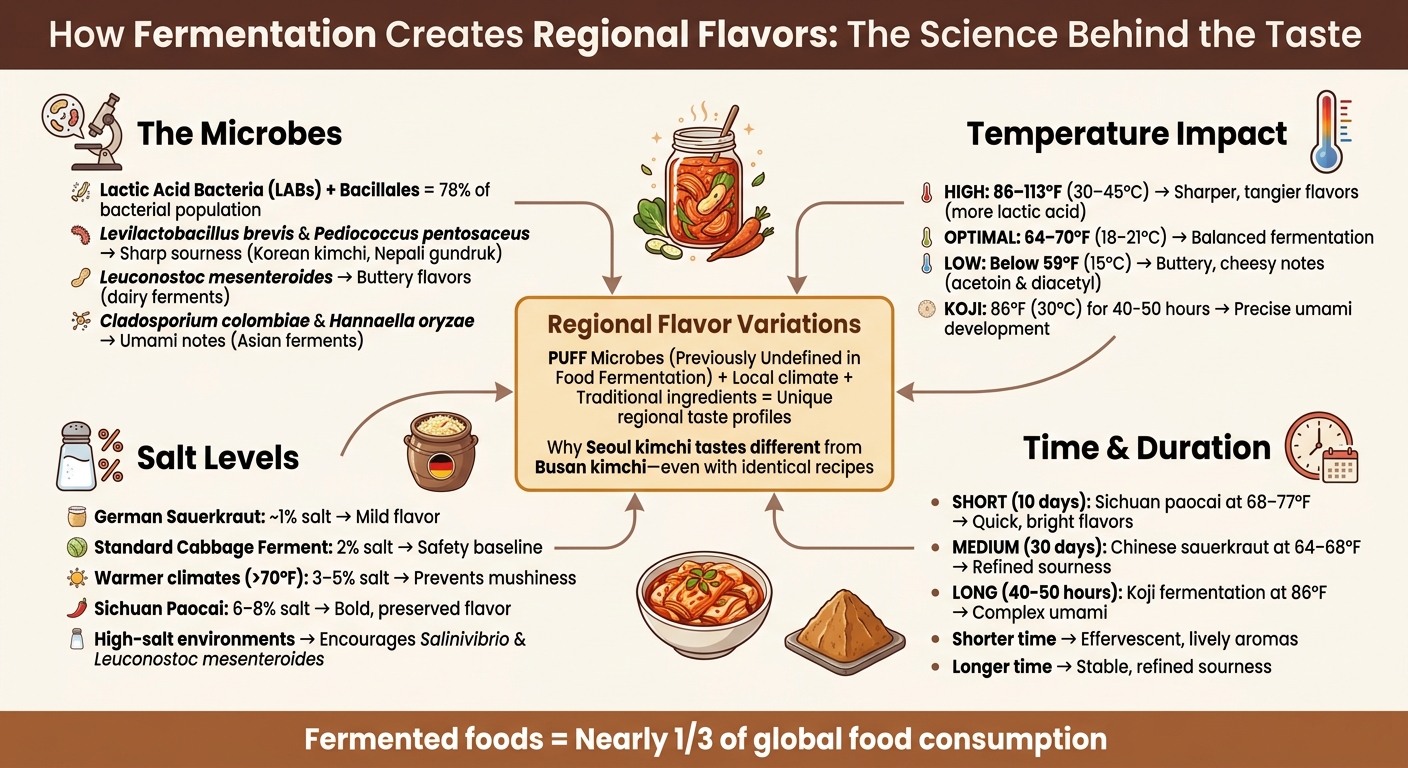
Key Factors Affecting Fermentation Flavor Development
How Fermentation Creates Regional Flavors
The Role of Microorganisms
Research examining 90 traditional fermented foods from Nepal, South Korea, Ethiopia, and Kazakhstan revealed that Lactic Acid Bacteria (LABs) and Bacillales dominate, making up 78% of the total bacterial population in these foods [4]. The type of fermentation – whether it’s vegetable-based or involves legumes and animal products – determines which microbes thrive. Vegetable ferments tend to attract carbohydrate-degrading LABs, while protein-degrading Bacillales are more common in legume and animal-based products [4].
Specific bacteria are behind the distinctive flavors of regional fermented foods. For example, Levilactobacillus brevis and Pediococcus pentosaceus contribute to the sharp sourness in Korean kimchi and Nepali gundruk [4][1]. Meanwhile, Leuconostoc mesenteroides plays a role in dairy ferments by converting diacetyl into acetoin, resulting in buttery flavor notes [1]. Fungi like Cladosporium colombiae and Hannaella oryzae also enhance umami flavors, particularly in traditional Asian fermentations [4].
Interestingly, regional flavor differences are often influenced by "PUFF" microbes – short for Previously Undefined in Food Fermentation organisms. These microbes vary by location and add unique taste elements that standard starter cultures can’t replicate. This explains why kimchi made in Seoul may taste different from kimchi prepared in Busan, even when using the same recipe. These microbial variations, combined with environmental factors, create the distinct flavor profiles tied to specific regions.
How Climate and Location Affect Fermentation
Environmental conditions play a huge role in shaping the outcome of fermentation. For instance, temperature has a direct impact on flavor development. Fermenting at higher temperatures, between 86–113°F (30–45°C), increases lactic acid production, resulting in sharper and tangier flavors. On the other hand, lower temperatures, below 59°F (15°C), promote the creation of acetoin and diacetyl, which add buttery or cheesy notes [1]. Traditional Chinese rice wine makers have long leveraged this knowledge, fermenting in late autumn or early spring when temperatures naturally stay below 50°F to enhance both flavor and quality [3].
Salt concentration is another critical factor, acting as a filter for microbial activity. High-salt environments, like those used in Korean soy sauce or fermented seafood, encourage the growth of salt-tolerant microbes such as Salinivibrio and Leuconostoc mesenteroides [4]. For example, Sichuan paocai is typically fermented with a 6–8% salt solution, while German sauerkraut uses about 1% salt [1]. These variations in salt levels significantly influence the flavor profiles of vegetable-based ferments. By understanding how microbes interact with environmental factors like temperature and salt, producers can better navigate the challenges of achieving balanced flavors in regional fermented dishes.
sbb-itb-7261261
Common Flavor Balancing Challenges
Managing Acidity and Umami
Fermentation is a delicate process that depends heavily on environmental conditions, making it tricky to predict the final flavor. For instance, when high temperatures meet low salt levels, lactic acid can build up too much, resulting in an overly sour taste. Temperature fluctuations can also alter flavor profiles in unexpected ways. One particularly tough issue is avoiding high pH levels, which can lead to "hammy sour" notes and even cause the product to darken or blacken [1]. These acidity concerns often set the tone for addressing other flavor elements like spice and sweetness.
Take traditional fermented condiments like soy sauce, for example. While they are beloved in many regions, their bold flavors may not suit every palate. Chefs like Michel Magada have approached this by reimagining the base ingredients without losing the essence of the original. As Magada puts it:
"The idea is not to reproduce soy sauce identically, but to use it as inspiration to create a new category of fermented sauces… Ingredients that are rich in protein, allergen-free, and grown in Switzerland" [5].
Another hurdle is balancing flavor adjustments with preserving the health benefits of fermented foods. Heating ingredients above 140°F (60°C) can help tone down strong flavors or integrate them into sauces, but it also destroys active probiotics, even though the flavor compounds remain intact [6][7]. This creates a dilemma for chefs: should they prioritize health benefits or focus on flavor? For instance, Northern Vietnamese cuisine leans toward subtle, clean saltiness, while Southern Vietnamese dishes often embrace sweeter, bolder, and more layered profiles [2].
Adjusting Spice and Sweetness
Balancing spice and sweetness offers its own set of challenges. During fermentation, microorganisms convert sugars into acids, which shifts flavors from sweet to sour [1][6]. This natural transformation often requires chefs to compensate for the reduced sweetness, especially when catering to specific regional preferences. In Southern Vietnamese and Thai cuisines, for example, sweetness from ingredients like palm sugar and coconut milk plays a central role. Meanwhile, Northern regions tend to highlight cleaner, saltier, and more herb-forward flavors [2][9].
Sweetness often acts as a counterbalance, softening intense seasonings or tempering the sourness caused by lactic acid fermentation [8][9]. The choice of sweetness and spice is crucial to maintaining authenticity. For instance, fresh bird’s eye chilies bring a sharp, vibrant heat perfect for street food, while dried chilies add a smoky depth that complements traditional Southern curries like Massaman [9]. Chef and author David Thompson captures this complexity well:
"Thai cooking is about juggling disparate elements to create harmony" [9].
Chefs usually adjust spice and sweetness levels after cooking, as heat can diminish acidity and change how sugar and chili are perceived [9]. By fine-tuning these elements, chefs can craft fermented dishes that honor traditional flavors while appealing to modern tastes. This delicate balancing act highlights the skill required to respect regional culinary roots while innovating with fermentation techniques.
Practical Methods for Adjusting Flavor
Controlling Time and Temperature
The flavor of fermented foods is deeply influenced by both temperature and timing. Higher temperatures speed up lactic acid production, resulting in a sharp sourness, while cooler temperatures encourage the development of acetoin and diacetyl, which lend buttery or cheesy notes to the final product [1]. For many fermentations, the sweet spot lies between 64°F and 70°F (18°C–21°C). At this range, species like Leuconostoc mesenteroides thrive early on, creating tangy, bright flavors before Lactobacillus plantarum steps in to complete the deeper souring process [10].
Shorter fermentation times tend to produce lively, effervescent aromas, while longer durations develop a more refined sourness with a stable, less fizzy character [6][10]. For instance, traditional Chinese sauerkraut ferments for about 30 days at 64°F–68°F (18°C–20°C), whereas Sichuan paocai is ready in just 10 days at a slightly warmer 68°F–77°F (20°C–25°C) [1]. Meanwhile, koji-based ferments like miso or sake require precision, with fermentation windows of 40 to 50 hours at around 86°F (30°C) [6].
Salt levels also play a critical role and should be adjusted based on temperature. In warmer settings above 70°F (21°C), higher brine concentrations of 3–5% slow down the process, preventing mushy textures and off-flavors. In cooler environments below 64°F (18°C), a lighter salt concentration of 2–2.5% keeps the fermentation active without making it overly salty [10]. As Farm Columbia explains:
"Higher heat would rush this process, skipping some of the complex flavor development" [10].
By carefully managing temperature, timing, and salinity, you can achieve a balance of flavors that reflect the essence of the ingredients and the environment.
Using Local Ingredients
Using local produce and spices is a great way to keep regional authenticity alive in your ferments. German recipes often rely on brassicas like cabbage and cucumbers, flavored with caraway, juniper berries, mustard seed, and bay leaves. On the other hand, Sichuan paocai incorporates Chinese cabbage, radish, ginger, chili, garlic, and Sichuan pepper for its distinct profile [11][1]. For cabbage fermentation, the standard safety guideline is a 2% salt concentration by weight – 20 grams of salt for every 1,000 grams of cabbage. However, Sichuan paocai typically uses a much stronger 6–8% salt solution [11][1].
Adding local fruits can also help balance the flavors of heartier vegetables. For example, grated apple in German sauerkraut softens the sharpness of storage cabbage while keeping its traditional taste intact [11]. For cucumbers, trimming the blossom ends and incorporating tannin-rich grape or oak leaves can help preserve their crunch [11]. Additionally, non-iodized salts like sea salt or kosher salt, measured by weight rather than volume, ensure consistency despite the varying moisture levels in fresh produce [11].
The right combination of ingredients and techniques can elevate the flavor while staying true to the local character.
Combining Fermented and Fresh Components
Pairing fermented foods with fresh elements creates a harmonious balance that enhances the overall dish. The sourness of fermented ingredients like kimchi or vinegar works well with rich, fatty proteins such as pork belly, cutting through the grease and adding depth [8]. Similarly, fresh, sweet ingredients like coconut milk or sugarcane can temper the sharp acidity of fermented bases or the saltiness of fish sauces [8][2].
Take Vietnamese pho as an example. Northern pho features a clean, savory broth with minimal garnishes, reflecting a focus on purity. Southern pho, in contrast, offers a sweeter, richer broth complemented by fresh herbs, lime, and bean sprouts, giving diners the freedom to adjust flavors to their liking [2]. As food writer Linh Pham puts it:
"The north values the essential, the pure. The south embraces abundance, customization, and a more robust sensory experience" [2].
Fresh components like cabbage slaws or raw herbs also provide a refreshing contrast to the bold flavors of long-fermented foods, cleansing the palate between bites [8][2].
Timing is key when using acidic elements. Adding fresh citrus late in the cooking process gives dishes a bright, zesty finish, while incorporating fermented acids earlier can help soften ingredients. Keep in mind that heating fermented foods above 140°F (60°C) will destroy their probiotics, though their flavor compounds will remain intact [6].
Building Skills in Fermentation and Flavor Balancing
Learning from Experienced Chefs
Getting fermentation right involves more than just following a recipe – it’s about understanding the delicate interplay of microbes, temperature, salt, and timing. Some methods, like lactic acid fermentation (think sauerkraut), are relatively forgiving. But others, such as koji fermentation, demand precision. Koji, for instance, requires a controlled environment of about 86°F (30°C) over a 40- to 50-hour period. Stray from these parameters, and the whole process can fail [6].
Training with seasoned professionals helps chefs develop the intuition needed to balance acidity and umami beyond what standard recipes can teach [7]. These experts also guide students in blending fermented bases, much like winemakers combine batches to create a balanced and complex flavor profile [5]. Such techniques are essential for achieving the nuanced flavor control that fermentation requires.
At Park City Culinary Institute, students gain this hands-on expertise by working alongside award-winning chef instructors. Programs like the Professional Certificate in Culinary Arts focus on building a solid foundation in both technique and flavor science. With options for on-campus or online learning, these courses are designed to accommodate different schedules while delivering practical, real-world skills.
This professional training doesn’t just preserve traditional methods – it equips chefs to adapt them for modern culinary innovation.
Combining Regional Methods with Modern Cooking
Once these foundational skills are in place, chefs can start blending traditional fermentation methods with modern techniques. Professional training encourages creativity while respecting regional traditions. For instance, chefs are now applying Japanese koji fermentation to unconventional ingredients like quinoa, hemp, or chickpeas. This not only creates allergen-free umami options but also aligns with today’s focus on sustainability and dietary inclusivity [5].
The concept of "cuisine without borders" has also gained traction, inspiring chefs to merge global fermentation practices. By comparing methods like Korean kimchi and German sauerkraut – both rooted in lactic acid fermentation but differing in ingredients and timing – chefs can innovate while staying true to the essence of these traditions. Michel Magada, a Lecturer in Practical Arts at EHL, captures this approach perfectly:
"The idea is not to reproduce soy sauce identically, but to use it as inspiration to create a new category of fermented sauces" [5].
This fusion of old and new methods allows chefs to reimagine flavors while honoring their origins.
The Art of Fermentation | Make Taste Happen Ep 1
Conclusion
Creating harmonious flavors in fermented dishes goes beyond merely following recipes – it requires understanding how local microbial communities, environmental factors, and time-honored techniques work together to shape unique taste profiles. For example, microbes like Lactobacillus sakei are key to the flavor of Dongbei suancai, while maintaining a steady 86°F (30°C) is essential for successful koji fermentation.
Using this knowledge, chefs can make practical adjustments to fine-tune their results. Controlling temperature with precision or tweaking salt levels can help tackle challenges like excessive acidity or balancing umami.
Fermented foods make up nearly one-third of global consumption, offering endless opportunities for culinary exploration [6]. As fermentation expert Sandor Katz puts it:
"Fermentation is everywhere, always. It is an everyday miracle, the path of least resistance." [12]
This philosophy encourages chefs to see fermentation as more than a process – it’s a chance to blend science, tradition, and creativity.
Whether you’re new to fermentation or honing advanced skills, experimenting with ingredients, temperatures, and timing can uncover how microbes transform food into flavors that respect tradition while pushing culinary boundaries.
For those eager to expand their expertise, Park City Culinary Institute provides hands-on training both on-campus and online. Their programs equip chefs to combine traditional techniques with modern approaches, ensuring every dish stays true to its roots while embracing innovation. This harmonious blend of tradition and creativity embodies the art of balancing regional flavors.
FAQs
How do I make a ferment less sour without ruining it?
To tone down the sourness in a ferment without compromising its quality, you can tweak the process. Try lowering the temperature or shortening the fermentation time – both methods help slow down acid production. Another option is to balance the flavors by introducing umami-rich ingredients or adding a touch of sugar or salt. Be cautious and make these changes gradually to avoid overdoing it and to keep the overall flavor well-balanced.
What’s the easiest way to control fermentation temperature at home?
Controlling fermentation temperature at home doesn’t have to be complicated. A stable environment can be achieved with a few simple tools and techniques. For instance, you can place your fermenter in a consistent-temperature spot like a closet or basement. To fine-tune the temperature, try using a heating pad or a cooling sleeve. Pair these with a thermometer to keep an eye on the conditions. These steps not only help maintain the right temperature but also reduce the risk of off-flavors, leading to a smoother fermentation process.
How can I keep regional flavors when using different local ingredients?
To keep the essence of regional flavors while using local ingredients, it’s important to focus on the traditional flavor profiles and how they are balanced. For instance, Korean cuisine often highlights the depth of umami through fermented ingredients like soy sauce. On the other hand, Thai dishes achieve a delicate balance of salty, sour, sweet, heat, and umami by incorporating elements like fish sauce and lime.
When substituting or adjusting ingredients, do so carefully. Thoughtful combinations and precise adjustments can help maintain the intended harmony of flavors. Additionally, if fermentation is part of the process, timing is key to preserving the dish’s authentic taste.
Serious about fermentation technique? Practice with chef guidance in our hands-on cooking classes in Salt Lake City and Park City, or request info about certificate programs in person and online.