
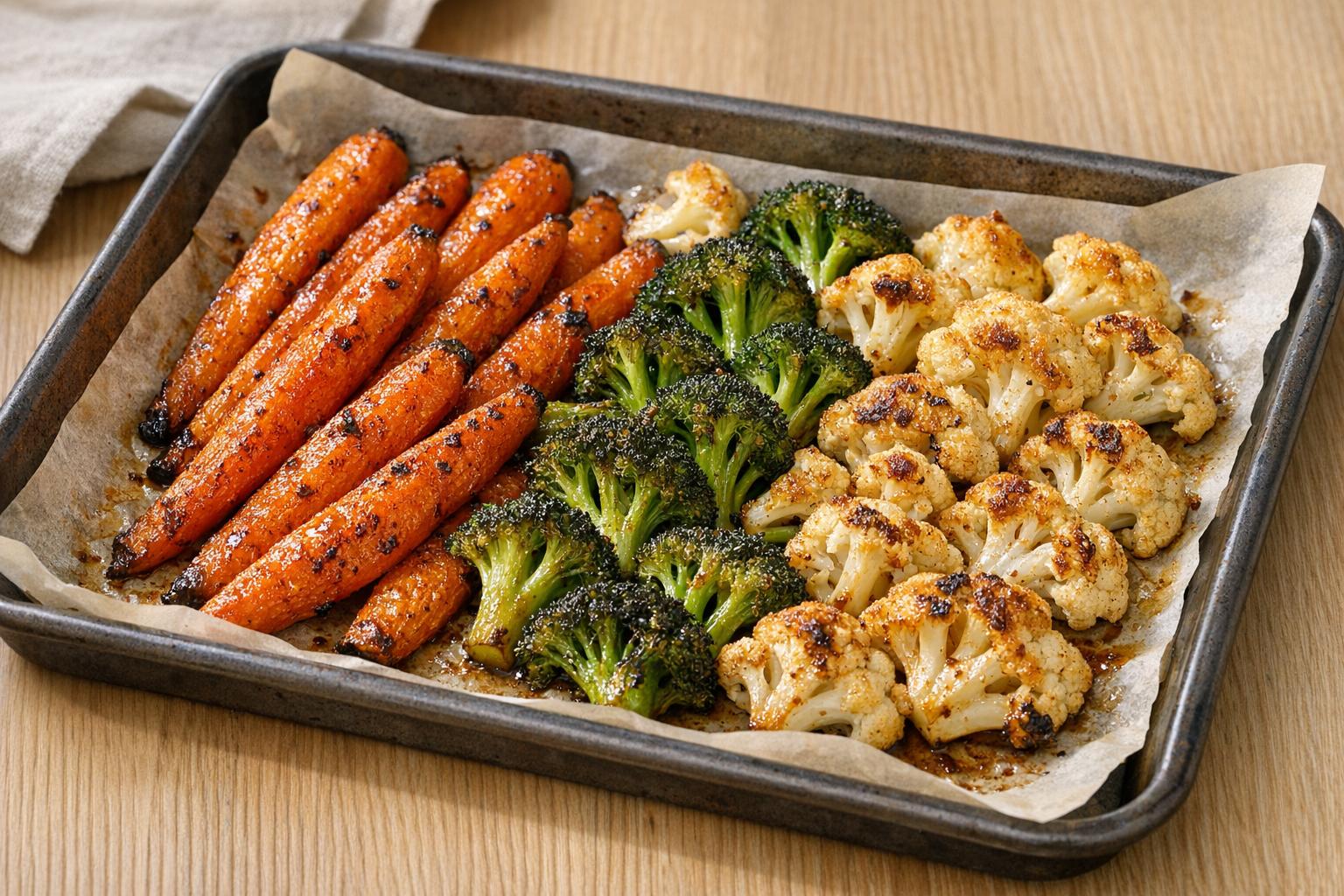
Oil-free roasting is a simple, high-heat cooking method that uses liquids like vegetable broth, balsamic vinegar, or lemon juice instead of oil. This approach delivers crispy, flavorful vegetables while cutting calories and avoiding greasy textures. It’s ideal for heart-healthy diets or those looking to enjoy the natural taste of whole foods.
Key points:
- No oil needed: Use liquids like broth or citrus juice for browning and seasoning.
- High heat is essential: Roast at 400–450°F for caramelization.
- Tools matter: Use heavy-duty pans, parchment paper, or convection ovens for best results.
- Preparation tips: Steam starchy veggies first for even cooking and toss with liquid binders to help spices stick.
- Common issues solved: Avoid sticking by letting food brown fully before flipping and keeping vegetables in a single layer.
This method highlights natural flavors, improves texture, and works well for a variety of vegetables like potatoes, carrots, broccoli, and squash. Whether you’re a home cook or a chef, oil-free roasting is a straightforward way to make healthier, delicious meals.
Core Principles of Oil-Free Roasting
How Browning Works Without Oil
Oil-free roasting relies on two key chemical processes: the Maillard reaction and caramelization. As Bill Adesida, Laboratory Manager at Ragus, explains, the Maillard reaction is a series of chemical changes that happen when reducing sugars and amino acids interact under heat. This process unfolds in three stages: glycosylamine formation, the Amadori rearrangement, and melanoidin production, which gives food its golden-brown color and rich flavor [5]. Caramelization, on the other hand, begins at around 320°F (160°C), while dextrinisation kicks off at about 248°F (120°C) [5].
Without oil to transfer heat, proper browning depends on direct contact with hot surfaces or high-velocity air. The process starts with surface dehydration, where moisture evaporates quickly, allowing the exterior to dry out and brown while the inside stays tender. These reactions make it clear that the right tools and techniques are essential for achieving optimal results without oil.
Tools You Need for Oil-Free Roasting
Using the right equipment is key to ensuring even browning and preventing food from sticking to the pan. Heavy-duty rimmed baking sheets are a must-have because thinner pans tend to warp under high heat, leading to uneven cooking. As America’s Test Kitchen puts it:
"Flimsy sheets warp in a hot oven, causing… food to brown unevenly" [8].
For a non-stick surface, parchment paper works well and still allows for a crisp finish. Silicone baking mats are another option, though they can trap moisture and may result in a softer texture. If you’re aiming for maximum caramelization, roasting directly on bare metal or aluminum foil is an option, but be prepared for potential sticking.
Convection ovens and air fryers excel at oil-free roasting thanks to their circulating hot air, which helps draw moisture away from the food’s surface. For dense vegetables, you can cover them for the first 10–15 minutes to trap steam, then roast uncovered to enhance browning. With the right tools, you can fine-tune temperature, spacing, and moisture to achieve consistent, oil-free results.
Controlling Temperature, Spacing, and Moisture
Temperature plays a major role in oil-free roasting. Preheating your oven to at least 400°F–450°F is essential for browning, and for vegetables like broccoli or Brussels sprouts, going as high as 500°F can help create a beautifully caramelized exterior.
Spacing is just as important. Leah Colins, Senior Culinary Editor at Serious Eats, emphasizes:
"Steam is the enemy of crispness. If vegetables are piled on top of each other or jammed too closely, they trap moisture and end up steaming rather than roasting" [6].
To avoid this, arrange your food in a single, uncrowded layer. This allows moisture to escape, ensuring a crisp, roasted texture instead of a soggy one.
Moisture control is another critical factor. Starchy vegetables like potatoes and carrots often benefit from a steam-then-roast method. Steam them for 4–6 minutes to soften slightly, then roast uncovered at high heat for a crisp finish. Because dry vegetables don’t hold spices as well, try tossing them with a light coating of vegetable broth, lemon juice, or a thin tahini-water mixture. If food begins to stick during roasting, a quick splash of broth can deglaze the pan and loosen browned bits.
Here’s a quick reference guide for roasting different types of vegetables:
| Vegetable Type | Recommended Temp | Estimated Time (Total) | Special Instructions |
|---|---|---|---|
| Root Vegetables | 425°F–450°F | 24–40 mins | Steam for 5 mins first |
| Cruciferous | 450°F–500°F | 15–25 mins | Roast uncovered; cut into wedges |
| Watery Veg | 425°F–450°F | 10–20 mins | Do not steam; roast uncovered |
| Winter Squash | 425°F–450°F | 25–40 mins | Flip halfway through |
Oil-Free Roasted Vegetables with Sweet Tahini Sauce!
Preparation and Seasoning Methods
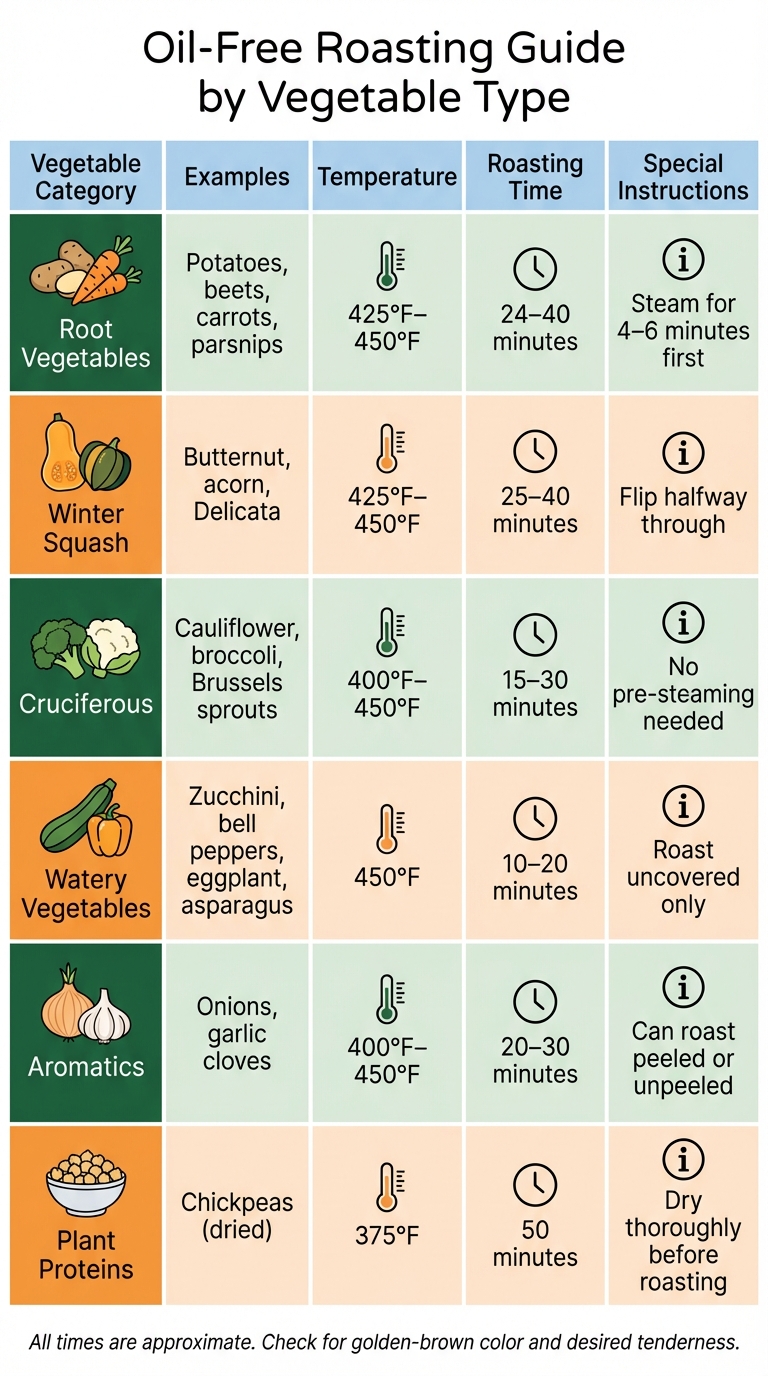
Oil-Free Roasting Guide: Temperature and Time Chart by Vegetable Type
How to Prepare Foods for Oil-Free Roasting
Start by cutting your vegetables into uniform sizes. Dice root vegetables into smaller pieces compared to water-rich ones, and briefly steam starchy varieties for about 4–6 minutes. This softens their interiors, making them ready for caramelization as soon as they hit the preheated pan [2][3][10].
Group vegetables by density to account for different cooking times. For instance, root vegetables might need up to 40 minutes, while cruciferous vegetables like broccoli are usually done in 20–25 minutes. Keep them on separate pans or divide them into sections on the same pan, so you can remove each group at the right time [4][9]. To boost caramelization, preheat your baking sheet in the oven before adding the vegetables. The hot surface not only helps with browning but also minimizes sticking [10].
Once your vegetables are prepped and grouped, it’s time to focus on seasoning to bring out maximum flavor – no oil needed.
Seasoning Techniques Without Oil
To help spices stick without using oil, try binders like vegetable broth, citrus juice, balsamic vinegar, soy sauce, or aquafaba [2][4][7]. One effective method is mixing 5 teaspoons of water with 4 teaspoons of tahini and adding spices like garlic powder, smoked paprika, and salt – this is enough to coat 1–1.5 pounds of vegetables [4].
For starchy vegetables, the moisture left from steaming creates a naturally sticky surface. Toss them immediately with salt and spices while they’re still damp. If you’re roasting chickpeas or other legumes, make sure they’re thoroughly dried after rinsing to ensure even crispiness.
Layer your flavors for depth. Apply dry spices before roasting to allow them to develop richness during cooking. Once the vegetables are out of the oven, finish with fresh herbs, nutritional yeast, or a squeeze of lemon to add brightness. If you notice vegetables sticking or seasonings starting to burn, deglaze the pan with a splash of broth or wine. This not only prevents burning but also redistributes the flavorful browned bits [1].
Roasting Times and Temperatures
With your food prepared and seasoned, the next step is to nail the cooking temperature. Oil-free roasting works best at 400°F to 450°F. The high heat compensates for the lack of oil by encouraging quick surface dehydration and browning. If your oven has a convection setting, use it – it helps circulate air, removing moisture faster and creating a crisp texture [3][4].
| Food Category | Examples | Recommended Temp | Time | Special Notes |
|---|---|---|---|---|
| Root Vegetables | Potatoes, beets, carrots, parsnips | 425°F–450°F | 24–40 minutes | Steam for 4–6 minutes first |
| Winter Squash | Butternut, acorn, Delicata | 425°F–450°F | 25–40 minutes | Flip halfway through |
| Cruciferous | Cauliflower, broccoli, Brussels sprouts | 400°F–450°F | 15–30 minutes | No pre-steaming needed |
| Watery Vegetables | Zucchini, bell peppers, eggplant, asparagus | 450°F | 10–20 minutes | Roast uncovered only |
| Aromatics | Onions, garlic cloves | 400°F–450°F | 20–30 minutes | Can roast peeled or unpeeled |
| Plant Proteins | Chickpeas (dried) | 375°F | 50 minutes | Dry thoroughly before roasting |
For the best caramelization, allow vegetables to release naturally from the pan before flipping them [10]. This ensures they develop that perfect golden crust without tearing or sticking.
sbb-itb-7261261
Oil-Free Roasting Methods
If you’re looking for ways to achieve perfectly roasted vegetables without oil, these techniques will guide you through different approaches that deliver delicious and crispy results.
Sheet Pan Roasting
Start by lining your baking sheet with parchment paper to keep vegetables from sticking. While silicone mats are a reusable option, they often produce vegetables that are softer and less crispy compared to parchment. For an extra boost of browning, preheat the baking sheet before adding your vegetables – this ensures they hit a hot surface right away.
To help seasonings stick, toss your vegetables with a liquid binder such as lemon juice, balsamic vinegar, vegetable stock, or a thin tahini-water mixture. Spread the vegetables out in a single layer, leaving space between each piece. Crowding the pan can cause steaming, which leads to soggy results. Group vegetables by density so you can remove faster-cooking ones as they finish.
If vegetables stick when you try to flip them, give them a few more minutes; they’ll naturally release when they’re ready. For even cooking in a standard oven, rotate the baking sheet and stir the vegetables every 10–15 minutes. If you’re using a convection oven, lower the temperature by about 25°F to prevent over-drying.
For tougher, denser vegetables that need extra softening before roasting, the steam-then-roast method works wonders.
Steam-Then-Roast Method
This two-step process is perfect for starchy vegetables like potatoes, carrots, and beets. Start by steaming them in a steamer basket for 4–6 minutes, just until a knife easily pierces through.
Next, transfer the vegetables to a rimmed baking sheet, add a splash of water or vegetable stock, and cover tightly with aluminum foil. Roast them until tender, then remove the foil and continue roasting at 400°F–425°F to develop a golden, crispy exterior. This method also protects delicate aromatics like garlic and shallots from burning during the initial cooking phase.
"Our simple hybrid steam-roasting technique is a superior method for home cooks… It allows them to steam in their own moisture until softened through. Then, remove the foil to expose the vegetables to the direct dry heat of the oven for roasting." – America’s Test Kitchen
Skip the steaming step for watery vegetables like zucchini, bell peppers, and asparagus, as their natural moisture can make them overly soft.
For even faster and crispier results, consider using a convection oven or air fryer.
Convection Oven and Air-Fryer Methods
Convection ovens and air fryers are excellent for achieving evenly crispy vegetables. These appliances circulate hot air, creating a consistent texture that’s hard to replicate in standard ovens. Set your convection oven to 425°F–450°F. The increased airflow speeds up the cooking process but can also dry out vegetables, so keep an eye on them.
If you’re using an air fryer, shake the basket every 15–20 minutes to ensure even browning and prevent sticking. Check for doneness early, and if the vegetables seem too dry, add a splash of vegetable stock or vinegar. Air fryers are also fantastic for bringing leftover roasted vegetables back to life, restoring their crispiness after refrigeration.
Avoid silicone mats in these high-airflow environments – they can block heat and prevent proper caramelization. Instead, stick to parchment paper or unlined pans for the best results.
Troubleshooting Common Problems
Once you’ve nailed preparation and seasoning, it’s time to tackle some common roasting hiccups. Here are tips to help you troubleshoot and perfect your roasting technique.
How to Prevent Food from Sticking
Patience is key when it comes to avoiding sticking. Let food brown completely before flipping – it will naturally release from the pan once a crust forms. For vegetables, wait until the bottoms turn golden; they’ll lift easily when ready. If you try to move them too soon, you risk tearing the surface and losing that satisfying crispiness.
Parchment paper is a game-changer for preventing sticking without relying on oil. Avoid using aluminum foil directly under vegetables, as they tend to cling to it. If sticking does occur, a quick splash of liquid can help loosen things up. For starchy vegetables like potatoes and carrots, a quick steam (4–6 minutes) before roasting keeps them moist and prevents them from bonding to the pan in the dry heat.
"Let the food cook without stirring until it starts to brown on the bottom and ‘unstick’ itself from the pan. When it’s brown, give it a stir to turn the browned side up. If the food sticks, add a splash more liquid to help loosen it." – Chad and Derek Sarno, Chefs and Authors [1]
Getting Even Browning
Uneven browning often comes down to overcrowding or skipping the flip. To avoid this, arrange vegetables in a single layer with some space between each piece. Flip them halfway through cooking to prevent steaming and promote consistent browning. For best results, group vegetables by density, so you can remove lighter, quicker-cooking pieces while denser ones finish roasting.
Cutting vegetables to create flat surfaces also helps. For example, halve Brussels sprouts or slice broccoli into wedges to increase contact with the hot pan. For deeper caramelization, skip the foil and use parchment paper or place the vegetables directly on the pan. Preheat your oven to at least 400°F–450°F; high heat encourages searing and makes food release more easily [1].
Avoiding Dry or Tough Results
Dry or tough vegetables can ruin an otherwise perfect roast. To keep them tender, try the steam-then-roast method: steam dense vegetables for 4–6 minutes, roast them covered with foil for 10–15 minutes, and then uncover to crisp up the exterior [2][8]. This method locks in moisture while still delivering a golden, crispy finish.
If you’re using a convection setting, lower the temperature by 25°F, as circulating air can dry out food faster [11]. Keep an eye on the pan during roasting – if things start looking too dry, add a splash of water or stock. For mushrooms, a quick 10-minute brine in salt water before roasting helps them hold onto their natural moisture [8].
"Food also dries out more over the long roasting time, so you might add a bit more flavorful liquid to replace lost moisture." – Chad and Derek Sarno, Chefs [1]
Conclusion
Mastering oil-free roasting means understanding the balance of heat, moisture, and timing to create vegetables that are both crispy and flavorful, all while keeping calorie content in check. Cooking at temperatures between 400°F and 450°F activates the Maillard reaction, which is responsible for the rich, caramelized flavors we associate with perfectly roasted vegetables – no oil required [1][3].
This guide has explored techniques like the steam-then-roast approach for starchy veggies and using liquids such as vegetable stock or balsamic vinegar to deglaze pans. These methods help prevent sticking, ensure even browning, and maintain the right texture [1][2]. Together, these strategies provide a straightforward way to achieve health-conscious, delicious results.
For those looking to elevate their skills further, the Park City Culinary Institute offers professional culinary training that dives deep into essential techniques. Their programs cover everything from knife skills to flavor development and heat control, all of which are crucial for mastering oil-free cooking. With flexible options like a 5- to 8-week Cuisine Certificate, available both on-campus in Salt Lake City and online, courses start at $2,440 [12].
Roast with confidence, savor the flavors, and enjoy consistent, delicious results every time.
FAQs
How do I keep vegetables from sticking when roasting without oil?
To keep your vegetables from sticking during oil-free roasting, start by lining your baking sheet with parchment paper or aluminum foil – this creates a non-stick surface. After washing your veggies, make sure to dry them well. Excess moisture can lead to sticking, which nobody wants. For starchy vegetables like potatoes or carrots, you can steam them briefly before roasting to avoid dryness and sticking.
When it comes to seasoning, get creative! Use salt, spices, and a splash of broth, citrus juice, or even mustard. These not only add flavor but also help the seasonings cling to the veggies without using oil. Arrange everything in a single layer, leaving some space between pieces. This setup ensures roasting instead of steaming. Roast at 450°F (or 425°F if you’re using a convection oven), and don’t forget to stir halfway through for even browning. If anything does stick, a quick deglaze with a bit of water or broth will take care of it.
Pro Tip from Park City Culinary Institute: Join one of our hands-on workshops to learn these techniques step-by-step and achieve perfectly caramelized, non-sticky vegetables every time.
What are the best liquid alternatives to oil for roasting?
If you’re skipping oil, there are still plenty of ways to add flavor and keep food from sticking. A few simple, flavorful liquids can do the trick:
- Water: Helps create steam to keep your food moist.
- Low-sodium vegetable or chicken broth: Adds a savory, rich flavor.
- Cooking wine: Brings acidity and a touch of complexity.
- Balsamic vinegar: Offers a sweet-tangy flavor and caramelizes beautifully during roasting.
You can lightly drizzle or brush these liquids onto your vegetables before seasoning, or even add them halfway through roasting to lock in moisture without any added fat. At Park City Culinary Institute, students learn to pair these oil-free methods with herbs, spices, and dry rubs. The result? Perfectly roasted, flavorful dishes that are both healthy and satisfying – all while sticking to familiar U.S. measurements like cups, teaspoons, and Fahrenheit for oven settings.
What are the benefits of using the steam-then-roast method for starchy vegetables?
The steam-and-roast approach is a game-changer for starchy vegetables. Steaming locks in moisture, giving them that soft, fluffy center we all love. Then comes the roasting, where high heat works its magic – caramelizing the surface to create a crispy, golden-brown finish. This method works wonders on veggies like potatoes, sweet potatoes, and carrots, offering a delightful mix of textures in every bite.