

When you visit a farmers market or local farm, asking the right questions can help you get better-quality ingredients, understand how your food is grown, and build a connection with the people producing it. Here’s a quick guide to what you should ask:
- Farming Methods: How are crops grown? Do they use organic practices, crop rotation, or natural pest management methods?
- Pesticides and Chemicals: Do they use pesticides or herbicides? If so, are they synthetic or organic-approved?
- Soil Management: How do they maintain soil health? Do they use compost, cover crops, or no-till farming?
- Harvest Timing: When was the produce harvested? Freshly picked items often taste better and last longer.
- Seasonality: What’s currently in season? Seasonal produce is often tastier and more affordable.
- Storage Tips: How should you store specific items to keep them fresh longer?
- Food Safety: What safety practices do they follow, such as water testing or worker hygiene protocols?
- Animal Welfare: For meat and dairy, how are animals raised? Are they pasture-fed or given organic feed?
- Certifications: Are they certified organic, or do they follow similar practices without certification?
- Buying Options: Do they offer bulk pricing, CSA programs, or standing orders for regular supply?
These questions not only help you make informed choices but also support local farmers and strengthen your community’s food system. Whether you’re a home cook or a culinary professional, these insights can improve your meals and deepen your appreciation for local produce.
Questions About Farming Methods
How do you grow your crops?
The way crops are grown has a direct impact on both the quality of the food on your plate and the sustainability of farming practices. Certifications like USDA Organic or methods such as regenerative farming highlight a commitment to careful soil, pest, and land management [1][3].
One key marker of sustainable farming is crop diversity. Farms that grow a variety of crops – like tomatoes, squash, beans, and leafy greens – often practice crop rotation. This technique helps reduce soil erosion and fosters biodiversity [1][4]. On the other hand, farms that focus on a single crop, known as monoculture, tend to strain the soil, depleting nutrients over time.
Interestingly, some farmers follow organic methods but skip USDA certification due to the lengthy three-year documentation process and high costs [3][4]. Instead of just relying on labels, ask farmers directly: "Do you follow organic practices?" This can give you a clearer picture of their farming approach.
These growing methods naturally lead to more questions about chemical use and soil care.
Do you use pesticides, herbicides, or fungicides?
This question goes straight to the heart of food safety and ingredient quality. It’s important to distinguish between synthetic chemicals and organic-approved products made from natural sources [1][8]. While both aim to protect crops, their environmental and health impacts can vary significantly.
Many sustainable farmers use Integrated Pest Management (IPM), a strategy that minimizes chemical use by applying "no-spray" or "low-spray" methods. They intervene only when absolutely necessary [8]. A good follow-up question is: "Do you spray on a schedule, or only when there’s an issue?" Their response can reveal their philosophy on pest control.
"If a farm is certified organic, then you know it will not use any prohibited substances applied for at least three years prior to harvest." – Carolina Farm Stewardship Association [1]
If a farmer isn’t certified but claims to avoid chemicals, dig a little deeper: "How do you handle pests?" or "Do neighboring farms use chemicals that could drift onto your crops?" These details matter.
This naturally leads to another crucial topic: soil management.
How do you manage your soil?
The health of the soil directly affects both the flavor and the nutrient content of the crops. Farmers committed to soil health often rely on practices like composting, cover cropping, crop rotation, and no-till or reduced tillage farming. These methods help maintain soil fertility, protect its structure, and support the microorganisms that keep it alive [1][3].
"If you have healthy soil and healthy roots, you’ll help prevent weeds before they get going." – Kel Giard, CEO, Clean Air Lawn Care [7]
Ask farmers whether they use synthetic fertilizers or prefer natural amendments like compost. Healthy soil produces stronger plants that can naturally resist pests and diseases, reducing the need for chemicals [7][9]. Farmers who prioritize soil health often speak with enthusiasm about their composting systems or the cover crops they plant between growing seasons. These efforts directly influence the quality of the food you’re purchasing.
"Generally, a farm with several crops is more likely to use crop rotation, which helps to bolster soil health, reduce erosion, increase biodiversity, and so much more!" – Carolina Farm Stewardship Association [1]
5 Must Ask Questions at the Local Farmers Market
Questions About Freshness and Quality
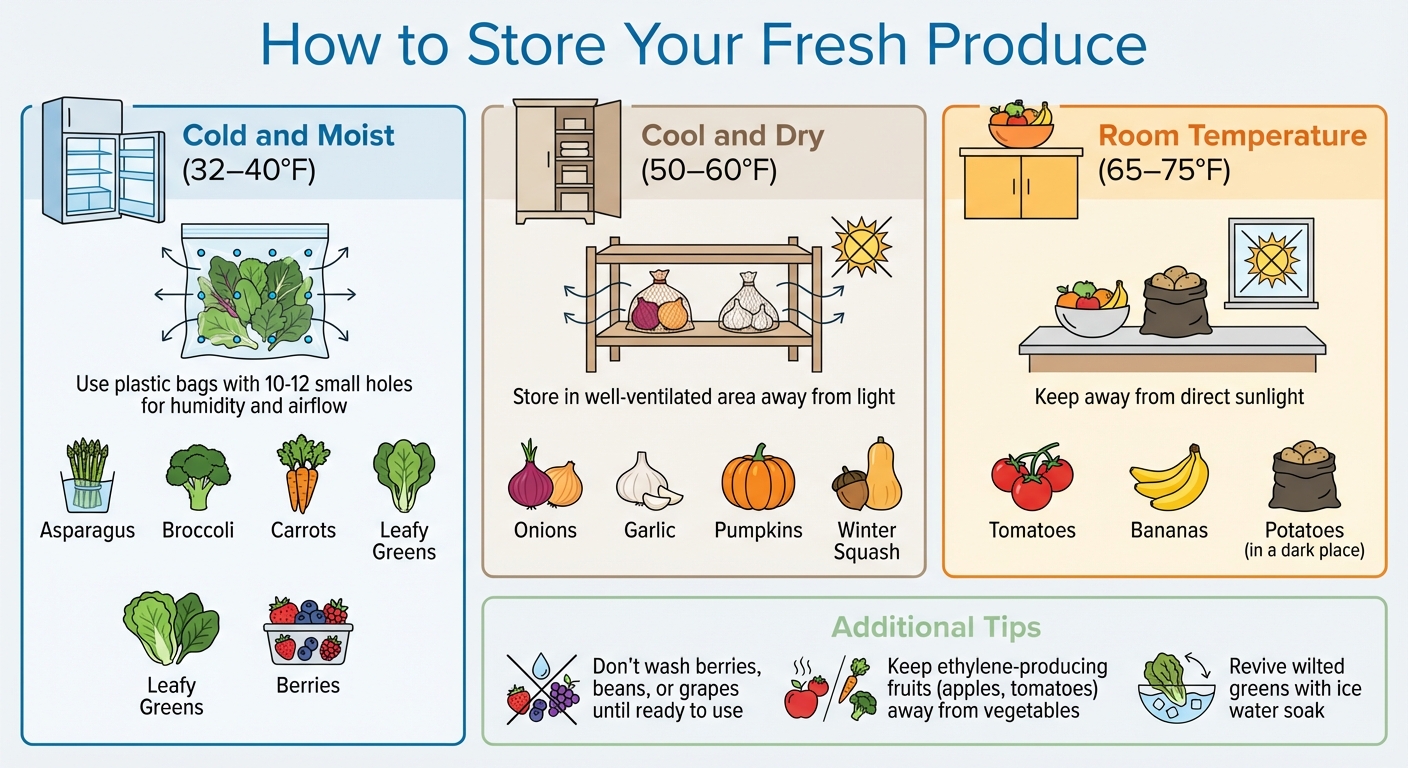
Produce Storage Guide: Temperature and Conditions for Fresh Fruits and Vegetables
When was this harvested?
The timing of a harvest plays a big role in the quality of produce – it affects flavor, texture, and how long it stays fresh. It’s worth asking your farmer if the produce was picked that morning. Early morning harvests are ideal because the cooler temperatures help slow down deterioration, giving the produce a longer shelf life [11].
For perishable items like berries and leafy greens, immediate cooling is key to maintaining their quality. Knowing when the produce was harvested can also clue you in on what’s at its peak, making it easier to choose fruits and vegetables that are in season and at their best.
What’s in season right now?
Seasonal produce delivers flavors that out-of-season items just can’t match. For example, a summer tomato is juicy and sweet, while a winter tomato often lacks flavor and has a mealy texture [14]. When produce is in season, it’s harvested at its peak ripeness, which typically means it’s both more flavorful and more nutritious – especially if eaten soon after harvest [15][14].
"In-season fruits have a depth and brightness of flavor that out-of-season produce just can’t compare to." – Marque Collins, Executive Chef, Tullibee [14]
Take December, for instance. This is the time to enjoy citrus fruits like blood oranges and Meyer lemons, hearty greens such as kale and radicchio, and root vegetables like rutabagas and sweet potatoes [14]. Seasonal produce is often a better choice for your wallet, too, as it doesn’t require the long-distance shipping that can drive up costs and environmental impact [14][5]. Planning meals around in-season ingredients ensures you’re getting the best flavors while also making sustainable choices. Once you’ve picked out your seasonal favorites, storing them properly is essential to keep them fresh.
How should I store this?
Proper storage can make all the difference in keeping your produce fresh. For starters, avoid washing items like berries, beans, or grapes until you’re ready to use them – extra moisture can lead to mold [12][13]. Also, be mindful of ethylene gas. Fruits like apples and tomatoes release ethylene, which can cause nearby vegetables like leafy greens and carrots to spoil faster [10][11].
Here’s a quick guide to storing different types of produce:
| Storage Category | Temperature (°F) | Examples |
|---|---|---|
| Cold and Moist | 32–40 | Asparagus, Broccoli, Carrots, Leafy Greens, Berries |
| Cool and Dry | 50–60 | Onions, Garlic, Pumpkins, Winter Squash |
| Room Temperature | 65–75 | Tomatoes, Bananas, Potatoes (in a dark place) |
For refrigerated produce, use plastic bags with 10 to 12 small holes. This helps maintain humidity while allowing proper airflow.
If your greens start to wilt, don’t toss them just yet – a quick soak in ice water can bring them back to life [13]. Farmers are also a great resource for storage tips, especially for items like potatoes and winter squash that may need curing before they’re ready for long-term storage [16].
Asking the right questions about freshness, seasonality, and storage can help you make the most of your ingredients, ensuring they stay fresh and flavorful.
sbb-itb-7261261
Questions About Food Safety and Ethics
What food safety practices do you follow?
Ensuring food safety goes beyond just the crops – it also involves how animals are raised and cared for. While the risk of food contamination can never be completely eliminated, it can be significantly reduced by following proper protocols. Start by asking whether the farm has a written food safety plan or Standard Operating Procedures. These documents show a clear commitment to maintaining safety standards. Water quality is a key factor here. If the farm uses well water for irrigation or rinsing produce, it should be tested for E. coli at least once a year. Only potable water should come into direct contact with food. Farms that use untreated surface water for post-harvest rinsing should be avoided, as this practice increases contamination risks.
"Food contamination risk cannot be totally eliminated, but it can be minimized." – University of Minnesota Extension [17]
Worker hygiene is another critical area. Farms should have training programs in place to ensure workers understand the importance of cleanliness and illness reporting. For example, workers showing symptoms like fever or diarrhea should not be handling food. Regular cleaning of tools and packing areas is essential, and produce should never be placed directly on the ground. When it comes to soil amendments, composted manure is a safer choice than raw manure. If raw manure is used, it should only be applied in the fall, allowing enough time for harmful pathogens to break down before planting. Visiting the farm in person can provide valuable insight into whether these practices are genuinely being followed.
Shifting focus to animal welfare, the way livestock is raised has a direct impact on both ethics and the quality of the final product.
How do you raise your animals?
The conditions in which animals are raised play a significant role in their welfare and the quality of meat they produce. Start by asking if the animals are pasture-raised without the use of growth hormones or sub-therapeutic antibiotics. If you’re buying beef, confirm whether it’s truly grass-finished, meaning the cattle are fed only grass and forage throughout their lives. For pigs and poultry, it’s worth asking if any supplemental grain provided is organic or non-GMO.
Rotational grazing is a practice that benefits both the animals and the land. It improves animal health, reduces the risk of parasites, and helps regenerate the soil. On the other hand, continuous grazing can lead to overused land, soil erosion, and less healthy livestock.
"Transparency in agriculture is incredibly needed today, and we are open about what we believe is the right way to harvest (slaughter, butcher) animals for food." – J&L Green Farm [18]
Many farms encourage customers to visit and see their operations firsthand, which is a great way to ensure their practices align with what they claim.
Are you certified organic or do you follow organic practices?
Understanding a farm’s approach to organic methods can offer valuable insight into their dedication to sustainability. USDA Organic certification requires that crops are 95% free of synthetic additives and that livestock is fed 100% organic feed. However, many small farms opt out of official certification due to the high costs and administrative hurdles involved.
"Many small farmers do not seek official organic certification because of the expense and bureaucracy. But many small producers you will encounter at local farmers markets are using sustainable farming practices that meet or even exceed those organic standards." – Gina Mathias, Sustainability Manager, City of Takoma Park, MD [6]
Ask the farmer if they use synthetic inputs like chemical fertilizers or pesticides. Also, inquire about soil management practices such as crop rotation or no-till farming. If they mention "no-spray" practices, clarify whether they avoid all chemicals entirely or use them sparingly and only when absolutely necessary. Some farms may also hold alternative certifications like "Certified Naturally Grown", which follows standards similar to USDA Organic but uses a peer-review system. Lastly, confirm that the farmer is actually growing or producing the items they sell. Some vendors at farmers markets may resell wholesale produce, which isn’t truly local or farm-fresh.
Questions About Ordering and Partnerships
Building clear ordering and partnership arrangements can simplify your supply chain while fostering stronger ties with local farmers.
Do you offer wholesale or bulk pricing?
If you’re managing a professional kitchen, planning an event, or studying at a culinary school like Park City Culinary Institute, buying in bulk can help stretch your budget. Many farmers offer wholesale pricing, which is often lower than what you’d pay at a farmers’ market [19]. Be sure to ask about minimum order requirements – some farms set these at $250 or more [19]. It’s also important to clarify payment terms, which might include 30-day billing cycles or additional fees for credit card payments [19].
For those who don’t need a full wholesale account, some farms offer canning cases – bulk quantities sold at a discount, perfect for preserving or high-volume cooking [20]. Signing up for a farm’s email list can keep you updated on weekly availability and special offers [19].
"GrowNYC Wholesale offers the bulk pricing that comes with higher volume." – GrowNYC Wholesale [19]
If you’re looking for regular supply, ask about ongoing ordering programs to ensure consistent access to fresh produce.
Do you have CSA programs or standing orders?
If bulk buying isn’t your style, long-term options like CSA programs might be a better fit. Community Supported Agriculture (CSA) programs allow you to purchase a share of a farm’s harvest for a full season [21]. These programs are great for ensuring a steady supply of fresh, seasonal ingredients. For professional kitchens, standing orders can provide a reliable stream of produce while helping reduce food waste by tailoring your menu to what’s currently in season.
Winter (December through February) is the ideal time to set up these arrangements, as farmers are planning their crops for the upcoming season [22]. Many farms send weekly availability lists via email or text, detailing the products, pack sizes, and prices they have on hand [22]. To make the partnership run smoothly, discuss order cut-off times, lead times (often 2–3 weeks for new harvests), and delivery schedules [22].
What’s the best way to contact you for special orders?
Once you’ve nailed down pricing and ordering details, it’s time to figure out the best way to communicate for special requests. Ask the farmer whether they prefer text or email [24]. Many farms send out weekly updates via email to keep customers informed [23][24].
"Understanding the preferences and needs of farmers is crucial in choosing the right communication channels. While personal interactions are valuable, respecting the farmer’s time and communication preferences strengthens the relationship." – Team Bushel [24]
For better menu planning, request an annual produce calendar that outlines the harvest schedule [22]. Some farms even use QR codes at their market booths, making it easy to access their website, sign up for emails, or view current price sheets [25]. These small conveniences can help you stay connected and organized.
Conclusion
Understanding harvest dates, soil care, and seasonal availability allows you to enjoy produce at its peak for flavor, freshness, and nutrition. As the Carolina Farm Stewardship Association puts it: "The fresher it is, the more nutrients it has and the better it will taste" [1].
Talking directly with farmers builds trust and opens up a level of transparency that’s often lacking in grocery store aisles. These conversations give you access to heirloom varieties and other unique produce that supermarkets simply don’t stock. Plus, your questions and feedback help strengthen this connection. Illinois Farm Direct captures it perfectly: "By asking questions, we develop a connection to the land, our rural neighbors, and what we’re having for dinner" [2]. This kind of relationship not only enriches your meals but also supports the local food systems that help communities thrive.
For culinary professionals and students, these farmer connections are even more impactful. Institutions like Park City Culinary Institute emphasize the importance of working directly with farmers to source unique ingredients, gain seasonal insights, and learn hands-on techniques. These experiences build technical expertise while deepening respect for quality ingredients, fueling a richer culinary journey.
Next time you’re at a farmers’ market, try asking just one or two thoughtful questions. The knowledge you gain could completely change the way you shop, cook, and connect with your food.
FAQs
Why should I ask farmers about their pest management practices?
Understanding how farmers manage pests gives you insight into how they keep their crops thriving while being mindful of the environment. Many farmers adopt integrated pest management (IPM), a strategy that focuses on reducing chemical usage, safeguarding ecosystems, and encouraging helpful insects to flourish. This approach often results in produce that’s not only healthier but also carries fewer pesticide residues.
Talking about pest management with farmers is also a way to back those who prioritize environmentally friendly methods. Supporting such practices doesn’t just benefit the planet – it also means healthier choices for your table. It’s a small step toward making smarter decisions about the food you consume while championing sustainable farming.
Why should I ask farmers about their soil management practices?
Understanding how farmers manage their soil can reveal a lot about the quality, nutrition, and environmental impact of the food you eat. Soil that’s rich in organic matter, maintained with cover crops, and minimally tilled produces nutrient-packed, flavorful fruits and vegetables. Plus, healthy soil reduces the need for synthetic chemicals, retains moisture better, prevents erosion, and even helps cut down on greenhouse gas emissions.
When you choose to buy from farms that focus on these sustainable methods, you’re not just getting fresher, more flavorful ingredients – you’re also contributing to the long-term health of the land and strengthening your local food system. For culinary students and home cooks alike, understanding these practices can lead to smarter ingredient choices and more thoughtful menu planning. Interested in taking your farm-to-table cooking skills to the next level? Park City Culinary Institute offers hands-on courses designed to help you bring these sustainable principles into your own kitchen.
Why should I ask if a farm is certified organic or follows organic practices?
Asking about a farm’s organic certification or growing practices gives you a clearer picture of how your food is produced and whether it aligns with environmentally conscious methods. Certified organic farms follow strict guidelines, like avoiding synthetic pesticides and chemicals, which often leads to produce that’s fresher, healthier, and packed with nutrients.
However, not all farms pursue official certification. Many still embrace organic principles, prioritizing natural techniques and caring for the environment. Learning about these practices helps you support farmers dedicated to sustainable agriculture while making thoughtful choices about the food on your plate.