
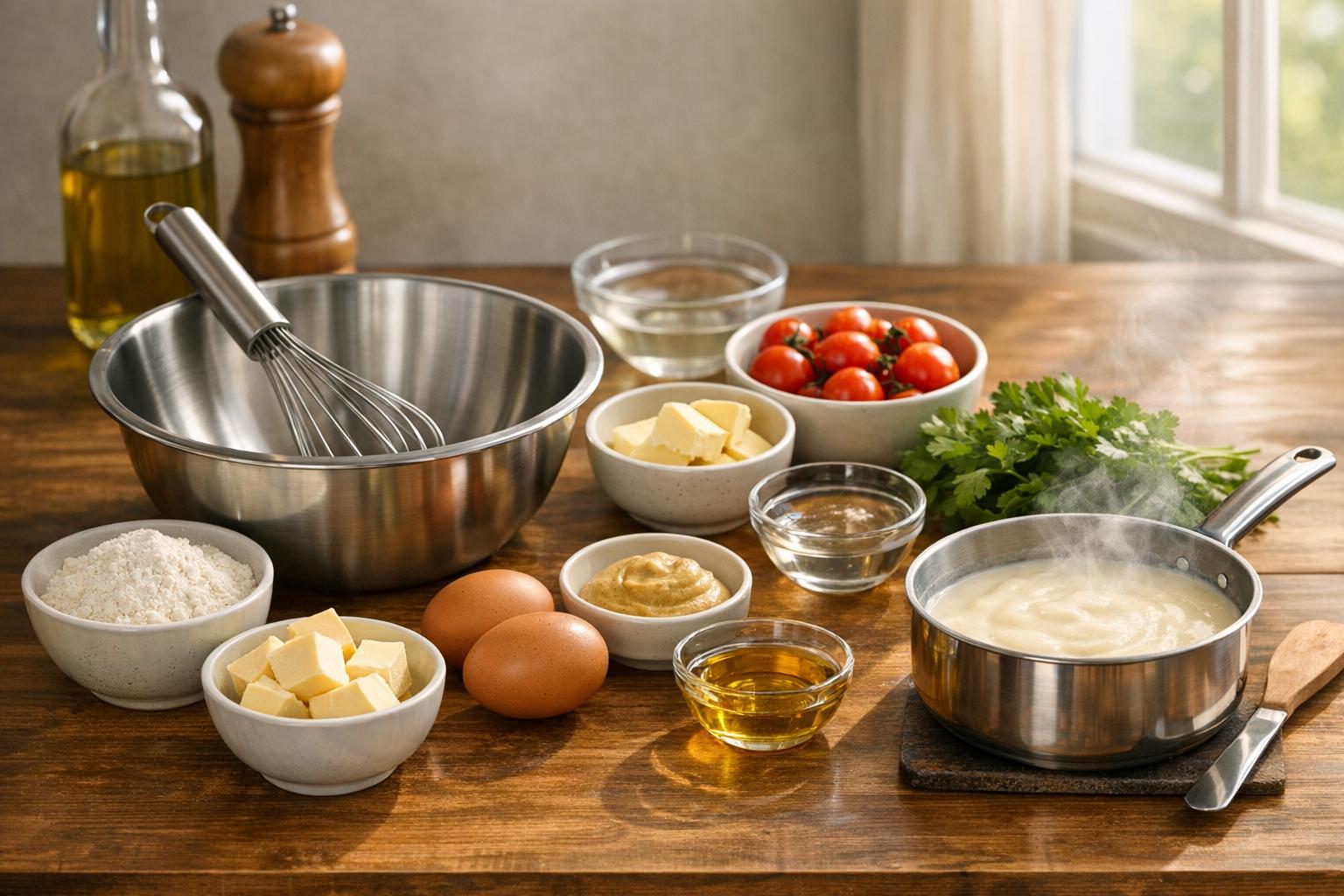
Mastering sauces can elevate your meals without fancy ingredients or complex recipes. By practicing five simple drills, you’ll build confidence and muscle memory, turning basics like butter, flour, and stock into rich, flavorful sauces. Here’s a quick rundown:
- Roux Consistency Drill: Learn to make smooth roux at various stages, from white to brown, and understand their impact on flavor and thickness.
- Béchamel Emulsion Practice: Perfect this creamy base sauce by controlling heat, whisking, and seasoning.
- Velouté Stock Reduction Exercise: Combine roux with stock and practice reducing for a silky, flavorful finish.
- Hollandaise Tempering Repetition: Master the delicate balance of egg yolks, butter, and heat for this classic emulsion.
- Tomato Sauce Binding and Balancing: Focus on reducing and seasoning for a well-rounded, thick sauce.
These drills take just 10–20 minutes and require basic tools like a saucepan, whisk, and spatula. Practice regularly, track your progress, and soon, sauce-making will feel effortless.
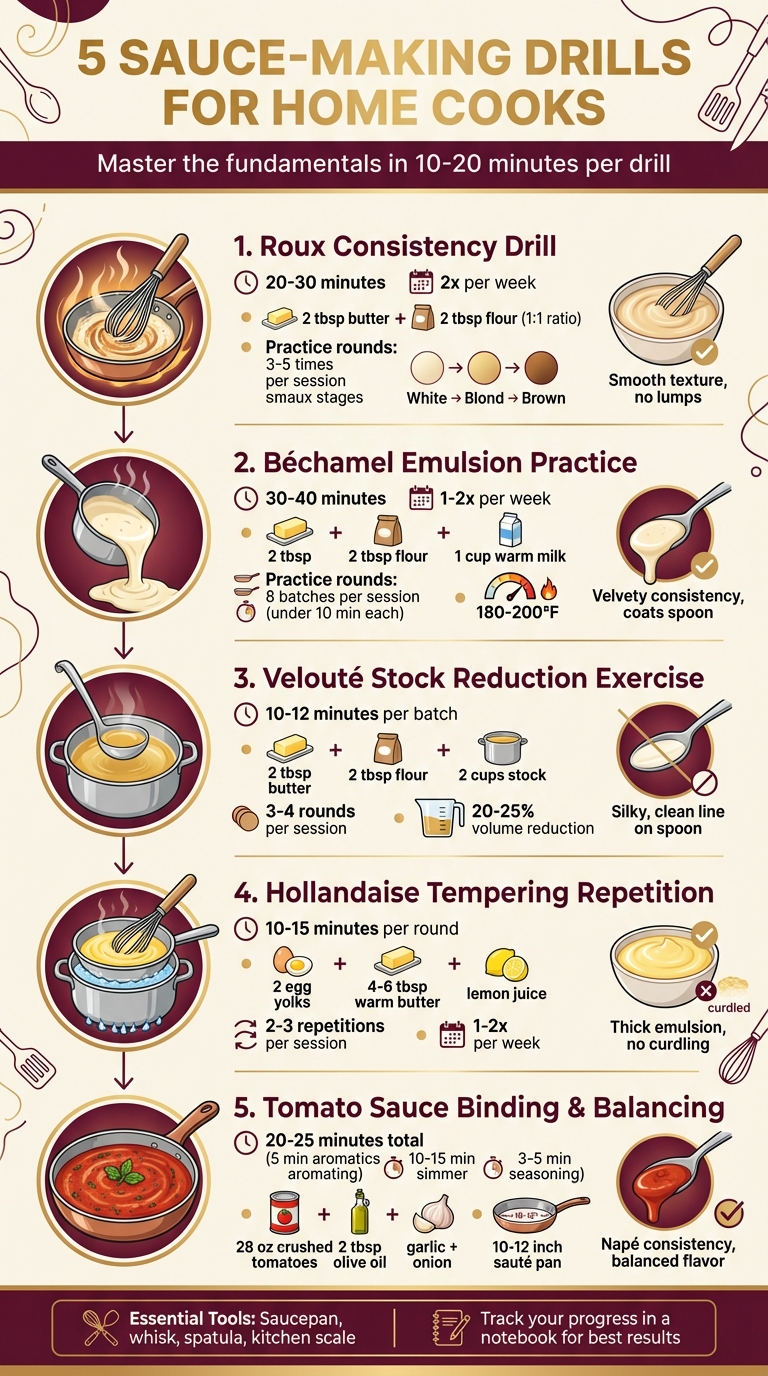
5 Essential Sauce-Making Drills for Home Cooks with Practice Times and Key Techniques
1. Roux Consistency Drill
Focus on Basic Techniques
A roux consistency drill is a simple but effective way to master the basics of roux-making. It involves preparing batches of roux – equal parts butter and flour by weight – at different stages to understand how they look, feel, and behave when thickening sauces. Start by melting 2 tablespoons of butter in an 8–10 inch skillet over medium heat. Add 2 tablespoons of all-purpose flour, whisking until smooth. Cook the mixture until it bubbles evenly, which usually takes about 3–5 minutes for a blond roux. Pay attention to these four key elements:
- Fat choice: Butter is ideal because its browning milk solids provide clear color cues.
- Ratio: Stick to a 1:1 weight ratio of fat to flour for medium-thick sauces.
- Heat control: Use medium to medium-low heat to avoid scorching.
- Whisking: Keep whisking steadily to ensure even cooking and prevent lumps.
Repetition for Muscle Memory
Once you’ve got the basic steps down, practice regularly to build muscle memory. Repeat the process 3–5 times per session, observing how the timing, color, and texture evolve – from pale cream to a deeper tan, and from a thick paste to a more fluid consistency as the fat coats the flour. Set aside 20–30 minutes twice a week for practice. Over time, you’ll instinctively recognize when the roux is done by its appearance, aroma, and how it clings to your spoon. To track your progress, keep a small notebook where you jot down details like fat and flour amounts, cooking times, burner settings, and the final results.
Improvement in Texture and Flavor Control
Once you can make a smooth roux consistently, experiment by adding measured amounts of cold or room-temperature milk or stock. This will help you understand how different roux quantities affect the sauce’s thickness. For example, use 1 tablespoon of roux per cup of liquid for lighter sauces or 2 tablespoons for thicker ones. Add the liquid gradually, whisking thoroughly between additions until the sauce reaches nappé consistency – that velvety texture where the sauce coats the back of a spoon and holds a clear trace when you run your finger through it.
As you cook the roux longer, from white to blond to brown, its thickening power decreases, but the flavor profile changes. A white roux, cooked just until the raw flour smell disappears, has the most thickening ability and a neutral flavor, making it perfect for milk-based sauces. A brown roux, on the other hand, develops a rich, toasted flavor that’s ideal for Cajun dishes or hearty gravies.
Avoidance of Common Mistakes
This drill also helps you avoid common pitfalls. For instance, not fully hydrating the flour with fat can leave dry pockets, while cooking at too high a heat risks scorching. Another frequent mistake is adding liquid too quickly, which can lead to lumps. Practice adding liquid in small increments, whisking each addition until completely smooth before pouring more. Test the differences between using cold and warm stock – cold liquid can cause the fat to seize up, requiring vigorous whisking to smooth it out. If you notice scorching, transfer the roux to a clean pot immediately to save the sauce from developing a burnt taste. By intentionally varying liquid amounts and practicing corrections, you’ll gain the confidence to adjust thickness and troubleshoot on the fly.
2. Béchamel Emulsion Practice
Focus on Basic Techniques
Béchamel, one of the classic mother sauces, is the foundation of comfort dishes like macaroni and cheese or lasagna. The process starts simply: melt 2 tablespoons of unsalted butter in a saucepan over medium-low heat, then stir in 2 tablespoons of all-purpose flour to create a pale roux. Let it cook for 1–2 minutes, but be careful not to let it brown. Here’s where the magic happens – slowly whisk in 1 cup of warm whole milk, adding it in three to four stages. Keep the mixture at a steady 180–200°F and whisk each addition for 20–30 seconds to prevent scorching. After 5–10 minutes of gentle simmering, the sauce should reach a smooth, velvety consistency, coating the back of a spoon without feeling gritty or overly thick. Start here and perfect this basic emulsion before diving into repetition drills.
Repetition for Muscle Memory
Once you’ve nailed the basics, repetition is key to making the technique second nature. Aim for eight batches in a session, with each one taking less than 10 minutes. Stick to the same pot and whisk so you can familiarize yourself with the process – the bubbling of the roux, the thickening as milk is added, and the smooth finish during simmering. This consistency helps reinforce the tactile and visual cues essential to sauce-making. Dedicate 30–40 minutes once or twice a week to practice. Programs like those at Park City Culinary Institute emphasize repetition, with 108 hours of hands-on training to master skills like sauce-making. As 2020 graduate Joy Rife shared about her instructor:
He takes the time during the last half hour to really teach about the food.[1]
Improvement in Texture and Flavor Control
Once you’re comfortable with the standard béchamel, start experimenting by tweaking one variable at a time. For instance, try adding an extra half tablespoon of flour or simmering the sauce for an additional 2 minutes. These small adjustments will help you understand how they affect the sauce’s thickness and mouthfeel. The classic 1:1:2 ratio (butter-flour-milk) creates a medium-thick sauce, ideal for baked dishes. If your sauce turns out too thick, stir in warm milk a tablespoon at a time. If it’s too thin, simmer it longer or mix in a small knob of butter blended with flour. Use your béchamel as a blank canvas to practice seasoning – add salt, white pepper, and a pinch (about 1/8 teaspoon) of nutmeg, tasting as you go to refine your palate and avoid overdoing it.
Avoidance of Common Mistakes
The most frequent béchamel mishaps – lumps, scorching, floury taste, or incorrect thickness – usually happen when the roux is rushed, cold milk is added too quickly, or whisking isn’t thorough. To avoid lumps, whisk constantly when adding the first splash of milk, ensuring the mixture is smooth before adding more. Gradual milk addition is crucial. If lumps do appear, remove the pan from heat and whisk vigorously, or strain the sauce through a fine-mesh sieve while it’s still hot. Scorching can be avoided by using moderate heat and stirring often, especially around the edges of the pan. For cheese sauces, take the béchamel off the heat before adding shredded cheese a handful at a time – overheating can cause the cheese to separate and turn greasy. By addressing these common pitfalls, you can elevate your sauce-making skills to the next level.
3. Velouté Stock Reduction Exercise
Focus on Basic Techniques
Velouté is a delicate, smooth sauce made by combining white stock – such as chicken, turkey, or fish – with a pale roux. The key is to whisk the stock into the roux and simmer it until it’s thick enough to lightly coat the back of a spoon [2][4]. Start by melting 2 tablespoons of butter in a pan, then stir in 2 tablespoons of all-purpose flour to form your roux. Cook this mixture for about two minutes, ensuring it stays pale without browning. Gradually add 2 cups of chicken stock in three stages: first forming a thick paste, then a creamy texture, and finally incorporating the full liquid. Once combined, reduce the heat to maintain gentle, consistent bubbles – avoid boiling, as it can ruin the texture. Skim off any foam or impurities that rise to the surface and stir frequently to prevent sticking. To check if it’s ready, dip a spoon into the sauce; if it coats the back and leaves a clean line when you run your finger through it, you’ve nailed it [2]. This exercise builds foundational roux skills while introducing more advanced sauce-making techniques.
Repetition for Muscle Memory
Consistency is everything when mastering velouté. Practice making it in 3–4 rounds per session to develop muscle memory. Each batch takes around 10–12 minutes and yields about 1½ cups of finished sauce [2]. Use the same measuring tools and whisk for every attempt. Pay attention to tactile feedback – the sauce will offer more resistance on the whisk as it thickens, and you’ll notice a smoother, silkier flow as it reduces. Keep track of each attempt by logging details like volume, cooking time, and final texture. Leftover velouté can be repurposed in soups, gravies, or other dishes, so nothing goes to waste [2][4].
Improvement in Texture and Flavor Control
As the velouté reduces, its flavors intensify. The stock’s savory notes become richer, saltiness increases, and any aromatics you’ve included will stand out more [2]. To track your progress, measure the initial volume and aim for a 20–25% reduction. Note how the texture evolves, from thin to medium to thick, and jot down reduction times in a notebook. Taste the sauce at different stages – beginning, midway, and when it reaches its final consistency. Season lightly at first, saving major adjustments for the end. You can elevate the flavor and texture with finishing touches like a squeeze of lemon, a splash of white wine, or a small knob of cold butter [2][5][7].
Avoidance of Common Mistakes
Avoid these common pitfalls to ensure a perfect velouté. Vigorous boiling should be avoided – it can cause the fats to emulsify improperly, leaving the sauce cloudy and greasy. Premature seasoning is another issue; adding salt too early can lead to an overly salty sauce as water evaporates. Skipping the skim step, known as dépouillage, can result in a sauce lacking the desired clarity and sheen. Always skim off any foam or fat that rises to the surface. If lumps form, remove the pan from the heat and whisk vigorously to smooth it out. For an extra-silky finish, try offsetting the pan slightly on the burner so impurities collect on one side, making them easier to skim before straining the sauce [2][7].
4. Hollandaise Tempering Repetition
Focus on Basic Techniques
Hollandaise sauce, a delicate emulsion of egg yolks and butter, demands careful temperature management. To start, set up a double boiler with 1–2 inches of simmering water, ensuring the bowl doesn’t touch the water directly. Whisk 2 egg yolks with 1 tablespoon of water and a squeeze of lemon juice to help stabilize the mixture. Once the yolks are frothy and slightly thickened, slowly drizzle in 4–6 tablespoons of melted, warm butter while whisking constantly. The butter should be warm – not hot – since excessive heat can scramble the yolks. Keep whisking until the sauce thickens enough to coat the back of a spoon. Remove from heat, season with salt, a touch more lemon juice, or a pinch of cayenne for flavor. If the sauce feels too thick, adjust with a bit of warm water. Perfecting this process lays the groundwork for building consistency through repetition.
Repetition for Muscle Memory
To build skill without wasting ingredients, practice with 1–2 yolks and 4–6 tablespoons of butter. Aim for 2–3 repetitions per session, keeping each round to about 10–15 minutes. Each session should focus on a single variable. For example, one round might emphasize maintaining very low heat, another might practice a slightly faster butter stream, and a third could fine-tune seasoning. Stick to this routine once or twice a week for several weeks. Use the same whisk and bowl each time to become familiar with how the sauce feels as it thickens. You’ll notice the sauce resisting the whisk more as it emulsifies and a silky texture when it’s ready. Leftover hollandaise pairs perfectly with eggs Benedict, steamed asparagus, or grilled fish.
Improvement in Texture and Flavor Control
Repetition helps refine your ability to balance richness, acidity, and seasoning. For instance, eggs Benedict often benefits from a slightly thinner, tangier hollandaise to balance the richness of the dish, while steamed vegetables might call for a thicker, more buttery version. Always taste and adjust at the end of each drill – a few drops of lemon can brighten the flavor if it seems flat, while a pinch of salt can bring out muted tones. Once you’ve mastered consistency, experiment with variations. Use different amounts of water to practice achieving both thick and loose textures. For a twist, try infusing the lemon juice with tarragon for a béarnaise-style sauce or add a pinch of smoked paprika for a unique brunch flavor. When incorporating bold ingredients, remember that a little goes a long way.
Avoidance of Common Mistakes
Some common missteps include using butter that’s either too hot or too cold. Overheated butter can shock the yolks and cause curdling, while butter that’s too cool won’t emulsify properly. Regular practice helps you find the sweet spot where the butter is warm and fluid but not sizzling. Another frequent issue is under-whisking, which can result in a thin or uneven sauce. This drill emphasizes constant, vigorous whisking – switch hands if needed to avoid fatigue. If the sauce breaks and turns grainy, don’t panic. You can often rescue it by whisking the broken mixture into a fresh yolk with a small amount of warm water to rebuild the emulsion. For more structured guidance, consider hands-on classes, like those offered by Park City Culinary Institute. Their programs provide one-on-one chef feedback to help troubleshoot and perfect your hollandaise technique.
sbb-itb-7261261
Sauces EVERY Chef should know! | Chef Jean-Pierre
5. Tomato Sauce Binding and Balancing
This technique-focused drill is all about mastering the art of balancing and binding flavors in tomato sauce.
Starting with the Basics
To practice, you’ll need a 28-ounce can of crushed tomatoes, 2 tablespoons of olive oil, 2–3 cloves of garlic, ½ small onion, ½–1 teaspoon of salt, ¼ teaspoon of sugar, and a pinch of red pepper flakes. Use a 10–12 inch sauté pan over medium heat to ensure even evaporation and natural thickening.[2][6] Begin by gently sautéing the garlic and onion until they soften, creating a sweet and aromatic base. Then, add the tomatoes and let the mixture simmer uncovered for 10–15 minutes. The goal here is a gentle reduction – allowing water to evaporate while the tomato’s natural pectins thicken the sauce without needing any added starch.[2][6] When the sauce coats the back of a spoon and leaves a clean line when swiped, you’ve achieved the right consistency.[2] Repeating this process helps you refine your technique.
Building Muscle Memory Through Repetition
Dedicate 20–25 minutes to this drill, breaking it into segments: 5 minutes for aromatics, 10–15 minutes for simmering, and 3–5 minutes for final seasoning.[2][6] Pay attention to burner settings, stirring frequency, and the time it takes to reach the desired consistency. With consistent practice, you’ll develop an instinct for when to adjust the heat, how often to stir to prevent sticking, and when the sauce is perfectly reduced without over-thickening.
Fine-Tuning Texture and Flavor
After 15 and 20 minutes of simmering, taste the sauce and make small adjustments. If it’s too acidic, add ¼ teaspoon of sugar. If it’s too sweet, balance it with a teaspoon of vinegar or lemon juice.[3][6] For a sauce that tastes flat, try a pinch of salt and, optionally, a small knob of butter or a drizzle of olive oil to round out the flavors.[2][3] If the texture isn’t right, continue simmering uncovered to thicken the sauce, or stir in warm water or stock 1 tablespoon at a time if it’s too thick.[2][3] Keep a log of your adjustments – writing down what you changed and the results will sharpen your ability to judge flavors and textures quickly.
Avoiding Common Pitfalls
To avoid mistakes, keep the sauce at a gentle simmer – look for small, steady bubbles rather than a vigorous boil.[2][6] Under-reducing is another frequent issue, leading to watery sauces that pool on the plate. Aim for a consistent nappe texture as your visual guide.[2] When seasoning, avoid adding sugar or salt all at once; make changes in ¼-teaspoon increments and allow time for the flavors to meld before adjusting further.[3] For a smooth, glossy finish, whisk in 1–2 tablespoons of cold butter or extra-virgin olive oil off the heat.[2][3] If you’re looking to fast-track your progress, hands-on classes like those at Park City Culinary Institute can provide valuable real-time feedback from professional chefs.
Tips for Success in Sauce-Making Drills
Building on the basics of sauce-making, these practical tips can help you refine your skills and achieve consistent results.
Start with fresh ingredients like shallots, garlic, and mirepoix to create a rich flavor base. For better control over seasoning, use homemade or low-sodium stock and unsalted butter. This way, you can fine-tune the salt levels as you go, ensuring your sauce is perfectly balanced.
Precision matters. Invest in a reliable kitchen scale and high-quality measuring cups to maintain consistency in your practice. When making roux, stick to a 1:1 weight ratio – 4 ounces of fat to 4 ounces of flour per quart of liquid is a good rule of thumb. Skipping precise measurements can lead to issues like lumpy textures or broken emulsions, so accuracy is key to building a flawless sauce.
As you cook, taste frequently and adjust gradually. If your sauce feels bland, try a pinch of salt or a splash of acid like lemon juice or vinegar to brighten the flavors. If it leans too acidic, balance it out with a touch of sugar or a drizzle of cream to add depth and roundness.
Keep a detailed notebook to track your progress. Write down ingredient ratios, cooking times, temperatures, and your tasting notes. This record will not only help you identify what works but also guide you in improving with each practice session.
Finally, be patient. Add ingredients slowly and whisk steadily to build muscle memory. If you’re looking for hands-on experience and expert guidance, consider joining a class at Park City Culinary Institute. It’s a great way to get real-time feedback and elevate your skills.
Conclusion
Practice these five drills regularly to build muscle memory and turn those intricate sauce techniques into second nature. With this foundation, you’ll be able to whip up sauces for everyday meals – whether it’s a creamy reduction to pair with steak or a rich tomato base for pasta.
Once you’ve mastered the basics, push yourself further. Try blending techniques – like creating a velouté with a touch of hollandaise or thickening a tomato sauce with a roux. Make small adjustments, taste as you go, and jot down your results to refine your skills.
"Online class is so awesome. I have the opportunity to be creative, change things up in any way I want to." – Joy Rife, 2020 Online Graduate, Park City Culinary Institute [1]
When you’re ready to take your skills to the next level, these drills lay the groundwork for advanced training in a professional culinary program. This hands-on approach is a cornerstone of the education at Park City Culinary Institute. Their 108-hour Cuisine Program, available both online and on-campus, offers savory techniques taught by award-winning chefs, recognized as Best of State from 2019 to 2022.
These drills are just the beginning. With consistent practice and expert guidance, you can elevate every dish you create.
FAQs
What should I do if my sauce is too thick or too thin?
If your sauce turns out too thick, you can fix it by gradually stirring in a little liquid – like water, broth, or milk – until it reaches the consistency you want. On the other hand, if the sauce is too thin, let it simmer uncovered to naturally reduce and thicken. Another option is to mix a thickening agent, such as cornstarch or flour, with water and slowly stir it into the sauce for a quick fix.
What mistakes should I avoid when making a roux?
To make a perfect roux, steer clear of these common mistakes:
- Skipping proper cooking time: If you rush and don’t cook the roux long enough, you’ll end up with a sauce that tastes like raw flour. Not ideal.
- Cranking up the heat: High heat might seem like a shortcut, but it often leads to a scorched roux, which can ruin the entire dish.
- Dumping in liquid too quickly: Adding liquid all at once can create stubborn lumps. Instead, pour it in gradually while whisking non-stop.
- Neglecting to stir: A roux needs constant attention. Stir it regularly to ensure it cooks evenly and doesn’t burn.
Patience and a watchful eye are your best tools here. Master these steps, and you’ll be rewarded with a smooth, flavorful roux every time!
What are some easy ways to add unique flavors to sauces like béchamel or tomato sauce?
Enhancing basic sauces like béchamel or tomato sauce can be surprisingly simple. For béchamel, consider infusing the milk with herbs like thyme or bay leaves before whisking it into the roux. Want to take it a step further? Stir in roasted garlic, caramelized onions, or a dash of freshly grated nutmeg for a richer, more complex flavor.
When it comes to tomato sauce, small tweaks can make a big difference. Roasted vegetables or fresh herbs such as basil and oregano can bring a fresh, vibrant taste. For a bold twist, try adding a bit of anchovy paste – it adds a subtle savory depth without overpowering. A splash of balsamic vinegar is another great option, balancing the sauce’s acidity while introducing a hint of sweetness.
By playing around with fresh ingredients, aromatics, and spices, you can transform these classic sauces into something uniquely yours!